23 Cover Up Tattoos for Women That Beautifully Transform Old Ink
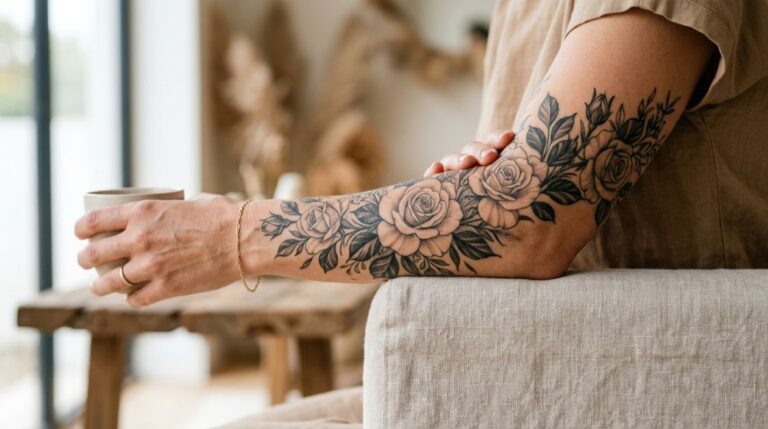
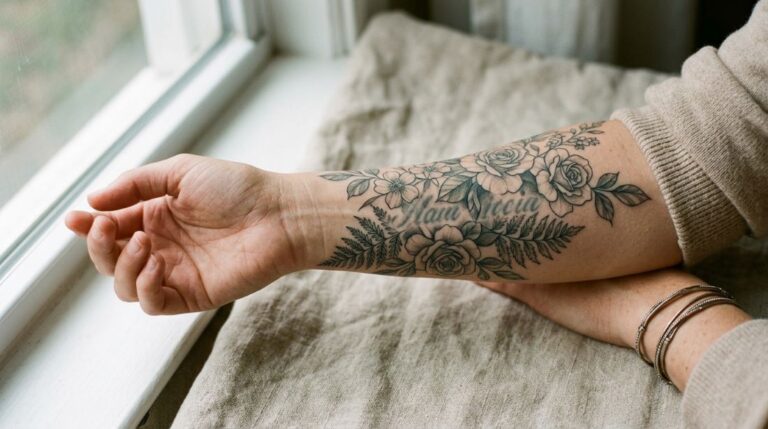
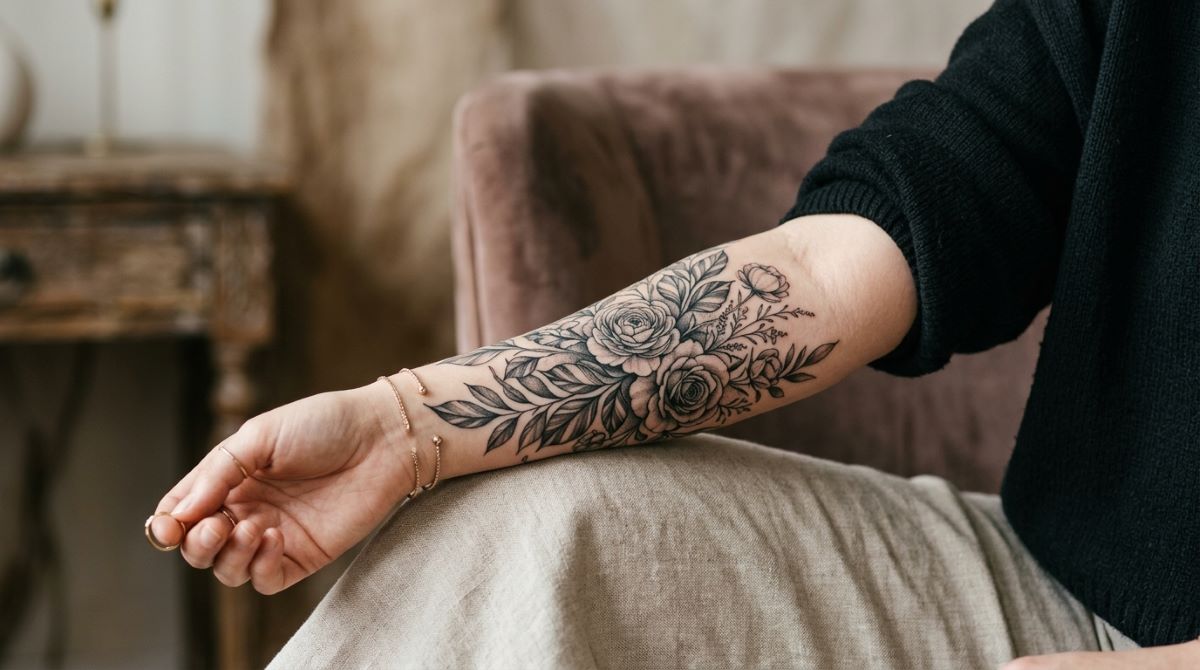
Cover-up tattoos for women can turn an old, faded, or unwanted design into something that feels intentional and personal. The right cover-up can use flowers, leaves, animals, ornamental shapes, dark shading, or carefully placed details to redirect attention from the original ink. Size, placement, color, and tattoo style all affect the final result. A small tattoo may require a slightly larger design, while darker old ink may work better with deeper shading or rich color. If you are searching for cover up tattoos for women, these ideas can help you find a design that fits your style without making the process feel overwhelming. You can also save money by choosing a simpler composition, keeping the design within an existing tattoo area when possible, and asking your artist about affordable ways to reshape old ink.
1. Romantic Rose Cover-Up
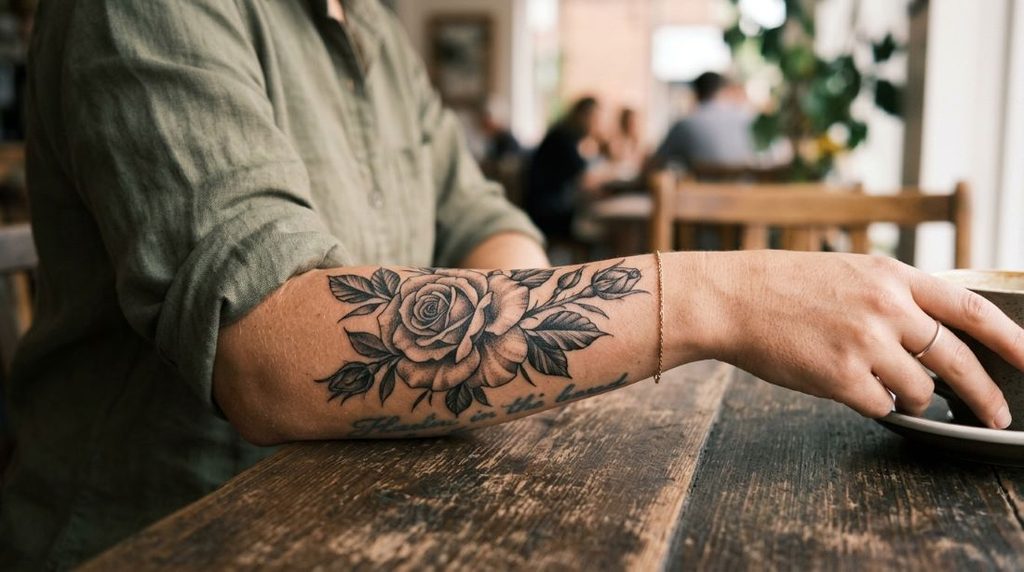
A rose is one of the easiest concepts to adapt when an old tattoo has uneven lines or a darker center. Large petals can cover sections of existing ink while leaves can extend around the edges. For women who prefer a feminine look, a rose can feel soft without being overly delicate.
Black-and-gray roses are especially practical for covering older designs because darker shading can hide small areas underneath. Ask your tattoo artist to create the rose slightly larger than the original tattoo. This gives them more space to work with.
For a budget-friendly option, choose one main rose instead of a full bouquet. You can also keep the surrounding leaves simple. If you are designing ideas at home before your appointment, sketch a few petal shapes over a printed photo of your current tattoo. This can help you see how much coverage you want.
A realistic rose works well on the forearm, shoulder, thigh, upper arm, and calf. If the original tattoo is very dark, your artist may suggest a design with stronger shadows. Let the artist decide how much existing ink can realistically be hidden.
2. Floral Bouquet With Layered Petals
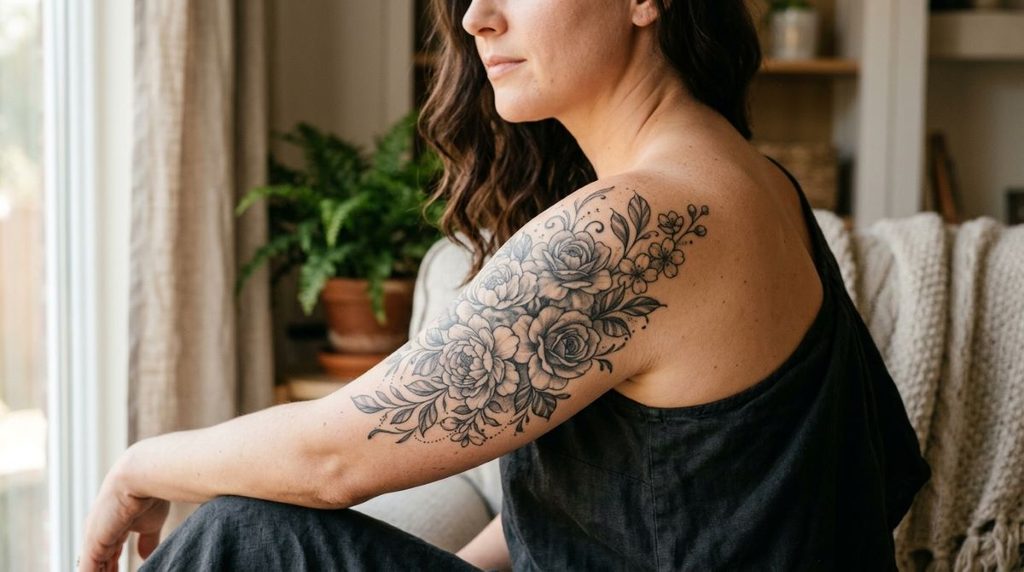
A floral bouquet gives you more room to hide an old tattoo because several flowers can overlap across the design. Large blooms can cover darker sections while smaller flowers and leaves fill gaps around the edges.
Choose two or three flower types that suit your personal style. Roses, peonies, daisies, and wildflowers can work together without making the tattoo feel crowded. Black-and-gray shading keeps the design easy to coordinate with existing tattoos.
If your old tattoo has a strong outline, ask the artist to place a larger flower directly over the darkest section. Lighter petals can then extend outward. This creates a natural flow rather than making the cover-up look like a patch placed over another tattoo.
A simple bouquet can also help control the price. More flowers usually mean more tattooing time. If your budget is limited, start with one large flower and a few leaves. You can always add details during a later appointment.
Before your session, collect reference photos that show the flower shapes you like. Avoid copying another person’s exact tattoo. Use references to communicate size, placement, shading, and overall mood.
3. Botanical Leaf Cover-Up
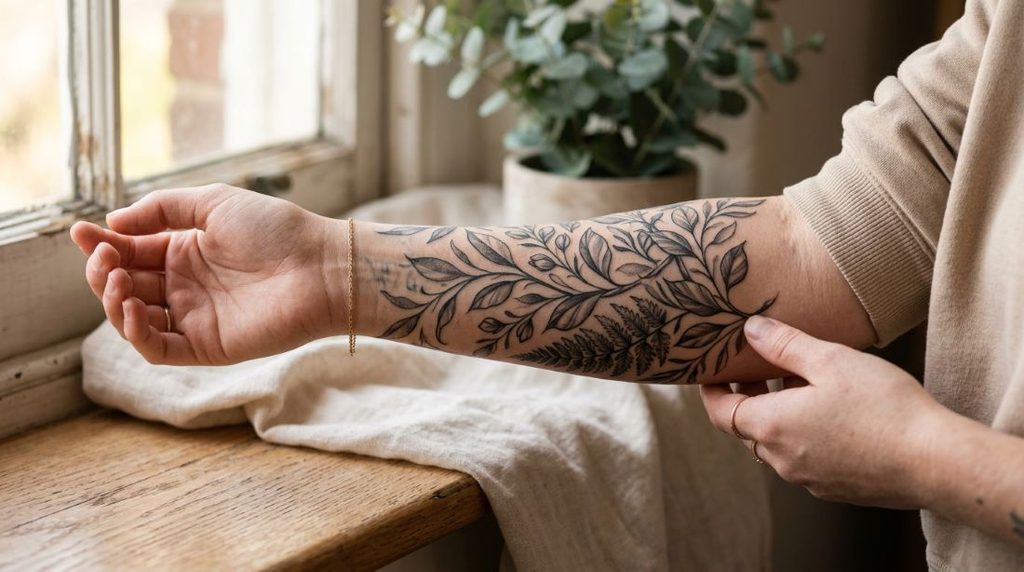
Botanical leaves can create an elegant cover-up without requiring an extremely dark design. Broad leaves can sit over existing lines, while thin stems can extend beyond the original tattoo and create a natural shape.
This idea works particularly well for tattoos that are narrow, vertical, or placed along the forearm. Ferns, eucalyptus-style leaves, olive branches, and tropical foliage can all create different moods.
For stronger coverage, ask for darker leaves around the old tattoo and lighter details toward the outside. This gives the eye a clear focal point. A mostly black-and-gray design can also cost less than a highly colored piece if the artist can achieve the required coverage with shading.
If you are working with a small budget, avoid adding too many tiny leaves. Fine details can increase appointment time. A few larger leaves often create a cleaner appearance.
You can make a simple DIY mock-up by drawing leaf shapes over a photo of your existing tattoo using a phone editing app. It will not show the final tattoo perfectly, but it can help you decide whether you prefer a horizontal branch, vertical stem, or curved arrangement.
4. Butterfly Cover-Up With Decorative Wings
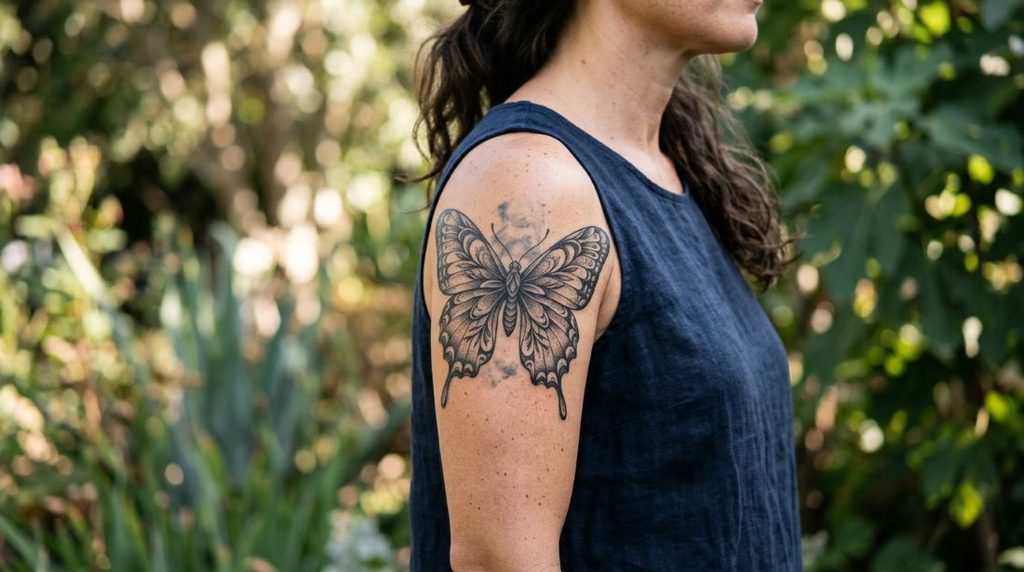
Butterflies can hide an old tattoo while giving the new design a graceful shape. The wings offer a wide surface for shading, which can help cover existing lines underneath.
For a feminine look, choose soft wing patterns with floral-inspired details. If the old tattoo is darker, stronger shading around the wing centers may provide more coverage. Your artist can then leave lighter areas near the outer wings.
Placement matters with butterfly designs. A centered butterfly works well on the shoulder, upper arm, thigh, or chest. A vertical butterfly can also follow the shape of the forearm.
You can keep the design affordable by choosing one larger butterfly instead of several small ones. Extra butterflies add more linework and shading time. A single detailed piece can still look complete.
If you already have other tattoos, look at their line weight and shading style before choosing the butterfly. A design that shares some of those visual qualities can make the new tattoo feel more connected to the rest of your collection.
5. Moth Tattoo With Dark Shading
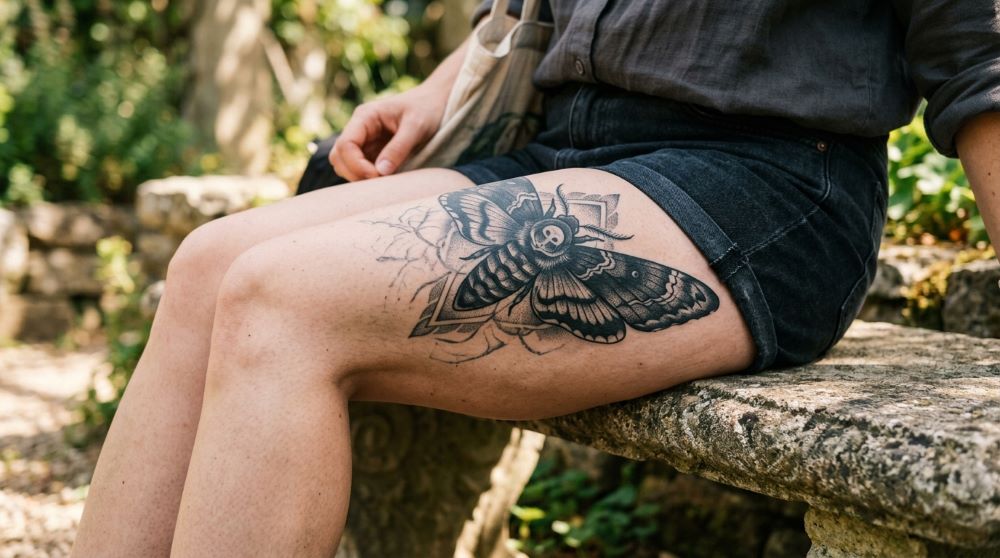
A moth offers more coverage than many small butterfly designs because its wings can be filled with substantial shading. This makes it useful for women who want to transform a darker or larger old tattoo.
The body can sit over the central portion of the existing ink, while the wings spread outward to cover surrounding lines. Black-and-gray moths can look dramatic without relying on bright colors.
If your old tattoo has a strong circular shape, a moth may work particularly well because the wings can extend beyond the original edges. Ask your artist to use the existing tattoo as part of the darker center rather than trying to hide every single mark.
For a lower-cost design, choose a symmetrical moth with moderate detail. Highly ornate wings may require much more tattoo time.
Think about placement before settling on the final shape. Thighs and upper arms offer more room for larger designs. Smaller moths can work on wrists or ankles, but the artist may have less space for full coverage.
6. Peony Cover-Up With Soft Shading
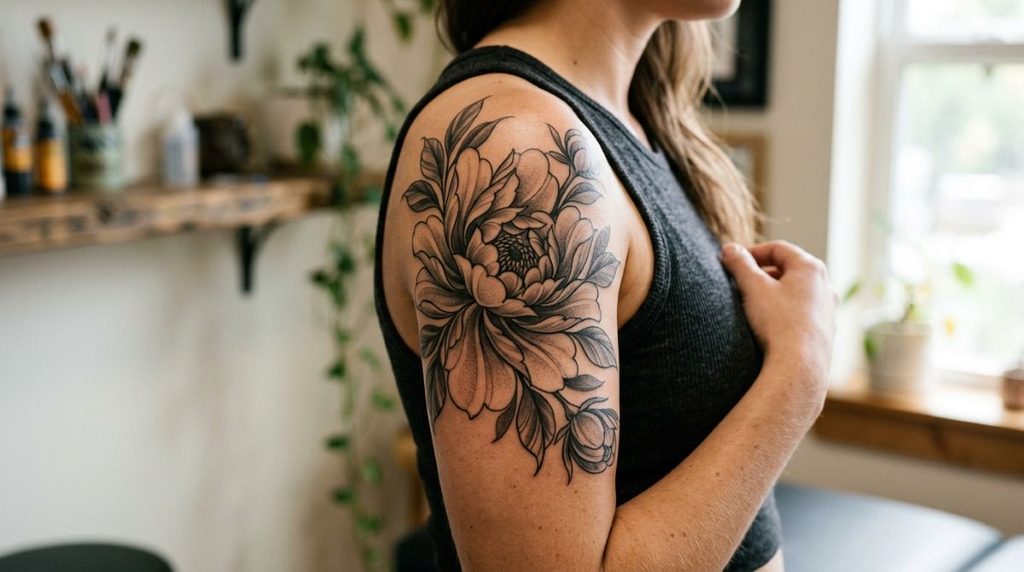
Peonies have large overlapping petals that can help hide unwanted lines beneath the surface. Their rounded shape also gives the artist plenty of space for shadows and darker areas.
A black-and-gray peony can look elegant while providing strong coverage. The petals can be arranged to follow the shape of your arm, shoulder, thigh, or hip. If the old tattoo is wide, several overlapping peonies may create a fuller composition.
To keep the design affordable, ask for one large flower with a few leaves rather than a full garden scene. The flower itself can provide most of the coverage.
Before your appointment, look at peony references from different angles. A side-view flower may fit better over a narrow tattoo, while a front-facing bloom may work better over a wider one.
Your artist can also decide where to place the darkest shading. Avoid choosing the shading pattern yourself if you are trying to hide old ink. The artist can see how the existing tattoo will interact with the new design and adjust the composition accordingly.
7. Bird With Flowing Feathers
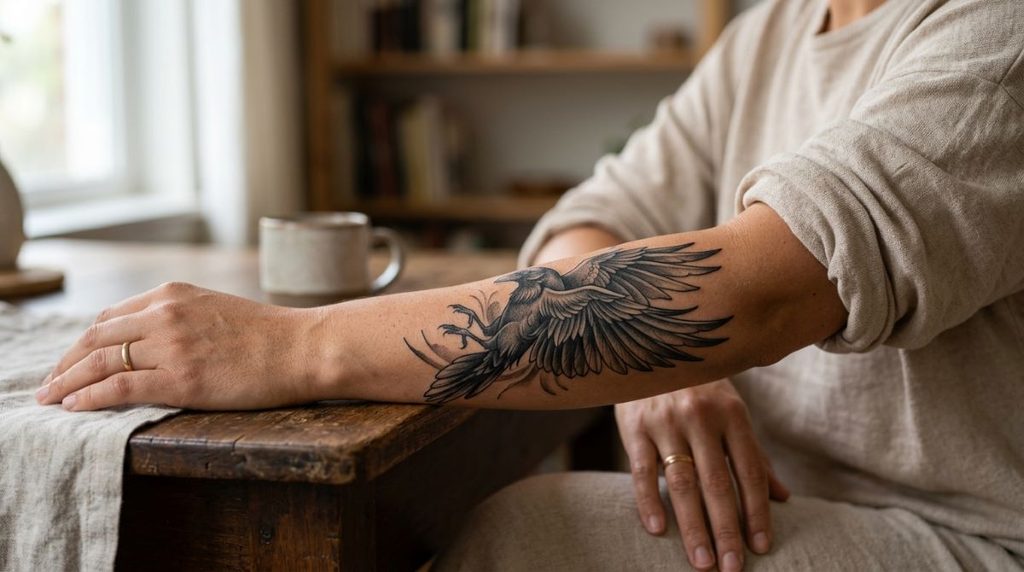
A bird design can cover an old tattoo while creating a sense of movement. The body can hide the central ink, while feathers extend outward over surrounding areas.
Choose a bird with enough body and wing surface for the amount of coverage required. Swallows, ravens, hummingbirds, and songbirds can all create different visual effects.
For darker old tattoos, a bird with strong black feathers may work better than a design made mostly from thin outlines. Your artist can use feather density to place darker sections where coverage is required.
If you want to keep costs manageable, skip a large background scene. A single bird with a few decorative feathers can feel complete without adding unnecessary elements.
Placement also affects the final shape. A bird flying horizontally works well along the forearm or collarbone. A perched bird can fit nicely on the upper arm or shoulder.
Take a photo of your existing tattoo before your appointment and discuss exactly what you want hidden. This helps your artist plan the design around the actual ink rather than relying only on your description.
8. Snake Design That Wraps Around Old Ink
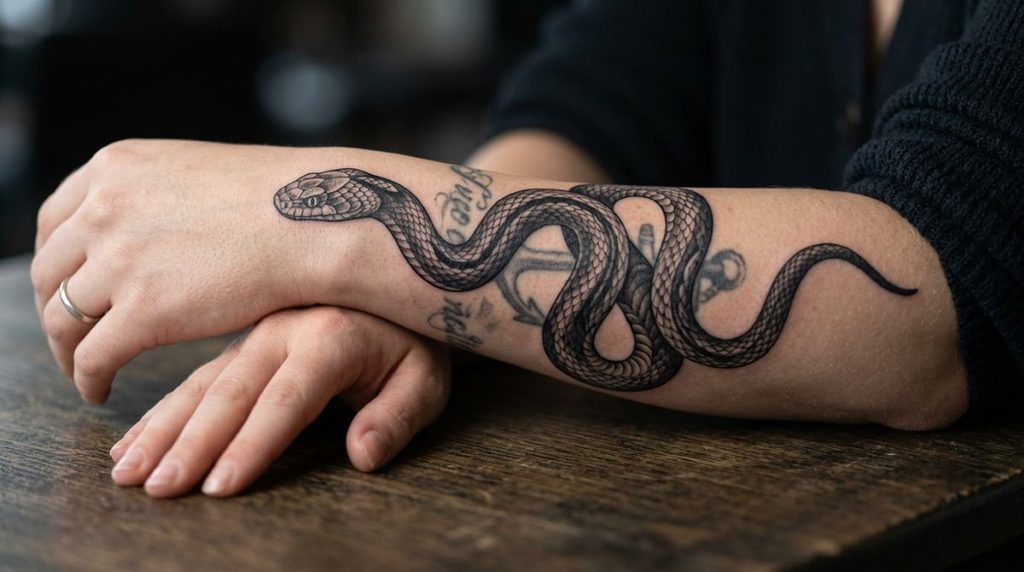
A snake can follow the natural shape of an arm, leg, or shoulder while covering sections of an old tattoo. Its long body gives the artist plenty of flexibility.
The snake can curve around existing ink instead of sitting directly over it. Darker sections can cover the strongest parts of the old tattoo, while the head and tail create visual balance.
Women who like a slightly bolder tattoo style may prefer a detailed snake with realistic scales. A simpler snake with clean shading can work for a more understated look.
To save money, avoid adding a large background. The snake itself can provide enough visual interest. You can also choose selective scale details rather than covering every inch with tiny lines.
A DIY planning trick is to use a piece of paper wrapped around your arm. Draw a loose snake path over the area and see whether the curve feels natural. This is only a planning exercise, but it can help you explain the direction you like to your tattoo artist.
9. Ornamental Cover-Up With Decorative Curves
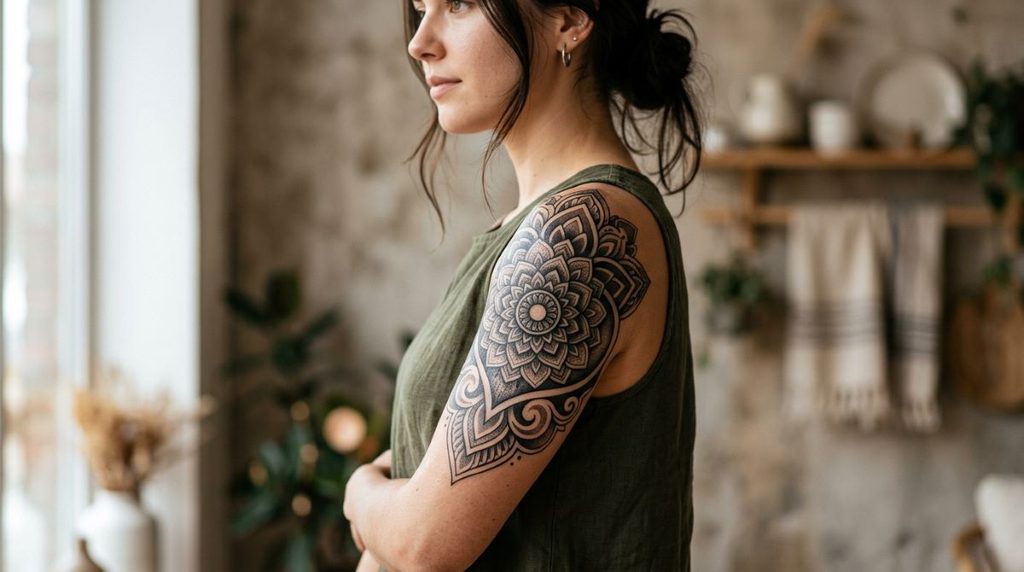
Ornamental tattoos can create a structured design around older ink. Curves, petals, dots, and shaded shapes can be arranged to hide specific areas while creating a decorative finish.
This style works well when the original tattoo has an awkward shape. Instead of forcing a flower or animal over it, your artist can build an ornamental design around the existing lines.
Black-and-gray ornamental work can be especially practical for covering medium-dark tattoos. The darker center can sit over the old ink, while finer details extend outward.
If your budget is limited, choose one main ornamental shape instead of a large sleeve-style composition. You can add extra details later if you want them.
Placement is another advantage. This concept can be adapted to the wrist, forearm, shoulder, thigh, sternum, or upper back.
When planning your tattoo, show your artist the exact section you want changed. A good cover-up design starts with the old tattoo itself. The new artwork should be planned around its size, darkness, and position.
10. Crescent Moon With Celestial Details
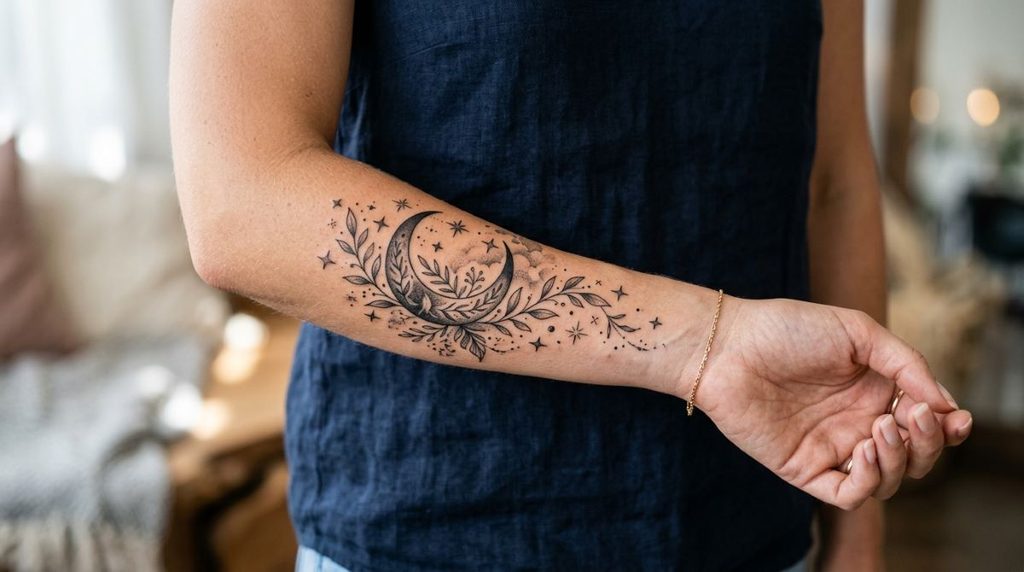
A crescent moon can become a beautiful cover-up when paired with darker shading and small surrounding details. The curved shape gives the artist room to work around an existing tattoo.
For stronger coverage, the inner moon can contain deeper shadows or decorative patterns. Small stars can extend beyond the old tattoo and make the overall piece feel intentional.
This design can be scaled to different body areas. A larger moon may work well on the thigh or shoulder. A smaller version can fit the wrist or ankle if the original tattoo is compact.
To keep costs lower, use a simple moon with a few stars rather than a detailed celestial scene. A limited number of decorative elements can still create a polished result.
If you already have tattoos with fine lines, ask for similar line weight where possible. If your existing collection is mostly bold, a stronger moon design may fit better.
You can sketch several crescent shapes on paper and place them over a photo of your tattoo. This can help you decide whether you prefer a thin crescent, thick crescent, or partially shaded moon.
11. Snake and Rose Combination
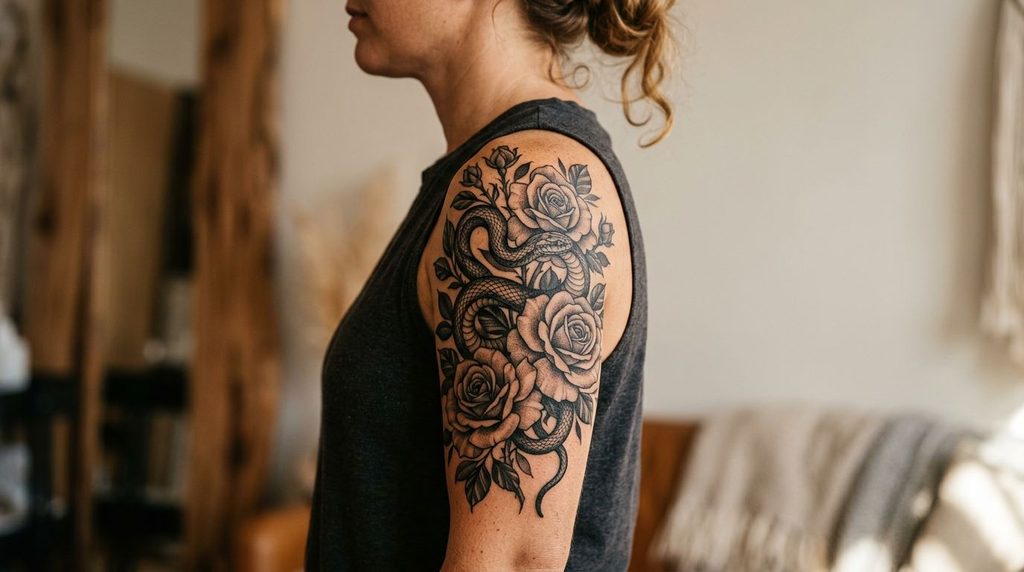
Combining a snake with a rose creates a strong cover-up concept because both shapes can provide substantial surface coverage. The rose can sit over the darkest part of the old tattoo while the snake curves around it.
The contrast between soft petals and textured scales gives the design plenty of visual interest. Black-and-gray shading can keep the composition cohesive.
This idea works especially well for upper arms, thighs, forearms, and calves. A longer snake can also help cover a vertical tattoo.
For a budget-friendly version, use one rose and one snake. Avoid adding a large background unless it serves a specific purpose.
If you like color, consider using a limited color accent rather than coloring the whole design. For example, the rose could have muted color while the snake remains black and gray. Your artist can tell you whether the old ink will affect the color result.
Bring a few references showing the type of rose and snake you prefer. Focus on shapes and placement rather than copying one existing tattoo exactly.
12. Koi Fish With Flowing Fins
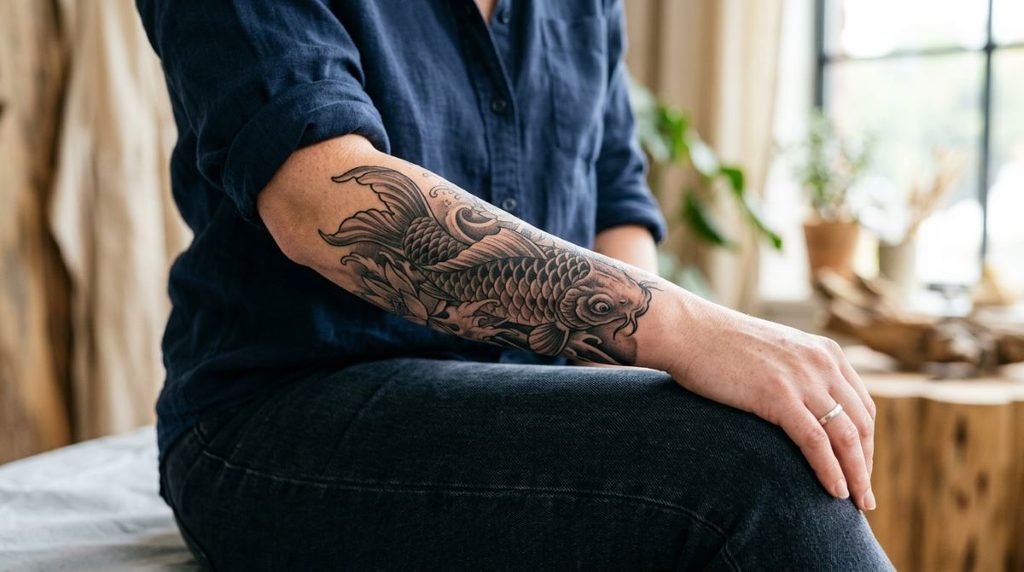
A koi fish provides a wide, curved body that can hide an older tattoo while giving the new piece a sense of movement. Flowing fins can extend beyond the original ink and create a larger visual shape.
For strong coverage, the body can contain darker scales and shadows. The fins can remain lighter, creating contrast without requiring heavy shading everywhere.
Koi tattoos work nicely on forearms, thighs, calves, and upper arms. Their curved shape can follow the natural direction of the body.
A simple black-and-gray koi can be more budget-friendly than a highly colored design. If you love color, ask about using one or two controlled shades instead of several colors.
When planning the piece, decide whether you want the fish swimming upward, downward, or sideways. That direction can change how the tattoo interacts with your body shape.
Take your old tattoo into account before selecting the fish size. A small koi may not provide enough surface area for complete coverage.
13. Wolf Portrait With Foliage
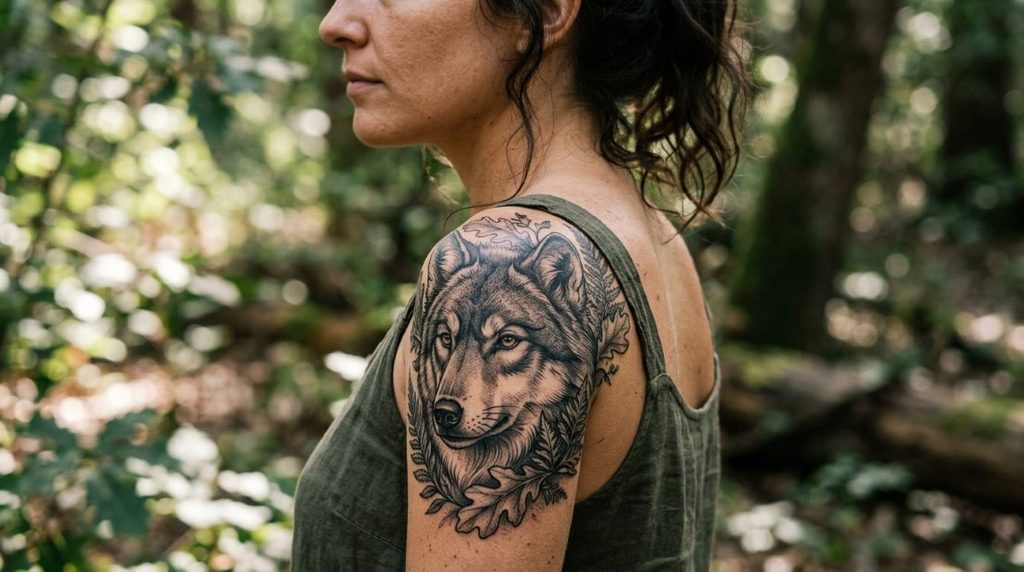
A wolf portrait can cover a medium or large tattoo because the face provides a broad central area for darker shading. Foliage around the head can extend the design and soften the edges.
If you prefer a realistic tattoo, ask your artist for a wolf with clear facial features and controlled shading. If realism is not your style, an illustrative wolf can offer simpler linework.
The darkest portion of the old tattoo can often sit beneath the wolf’s facial shadows or fur. Your artist should determine exactly where those areas go.
To keep the price manageable, choose the wolf alone with a few leaves instead of adding a full forest background. This still gives you a substantial cover-up without making the piece unnecessarily large.
A wolf can work on the shoulder, upper arm, thigh, calf, or upper back. Larger placements allow more room for fur detail.
Before your appointment, gather photos of wolf expressions and fur styles you like. This gives your artist a clearer idea of the mood you want.
14. Raven With Layered Feathers
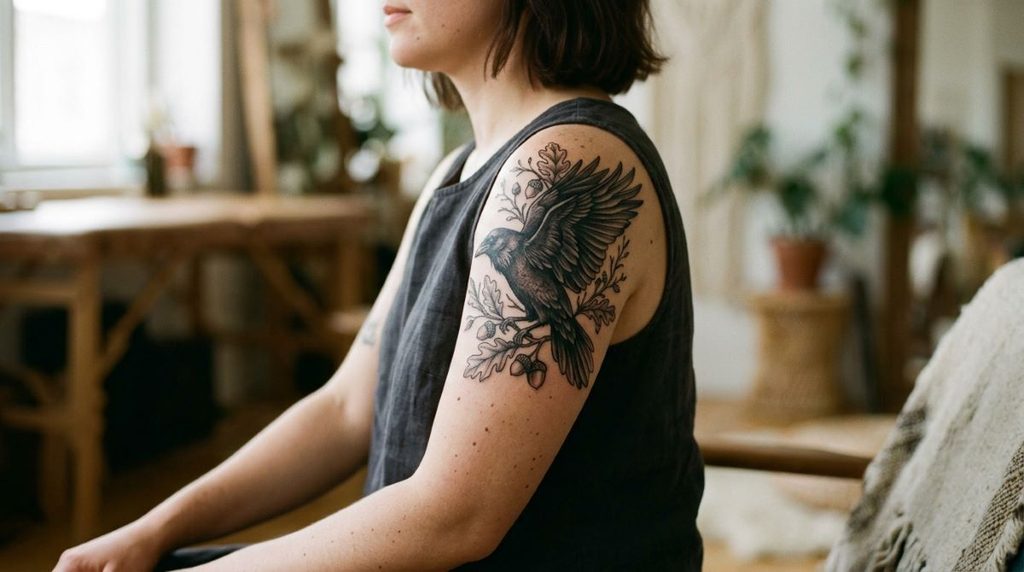
A raven is another useful choice for darker cover-up work because its feathers naturally lend themselves to strong shading. The bird can sit directly over old ink while the wings or tail extend outward.
You can choose a perched raven for a compact design or a flying raven for a larger area. Curved feathers can also help soften the edges of the original tattoo.
For a more feminine look, add a few delicate branches or small leaves. These details can make the design feel softer without changing the bird itself.
If your budget is tight, skip a detailed background. Focus on the raven and use selective feather highlights to create dimension.
Placement is flexible. A raven can work on the shoulder, forearm, upper back, thigh, or calf.
A useful planning step is to take a clear photo of the tattoo in natural light. Show that image to your artist so they can see the exact darkness and shape. The final design should be based on the real tattoo rather than an imagined version of it.
15. Lotus Flower With Strong Center Shading
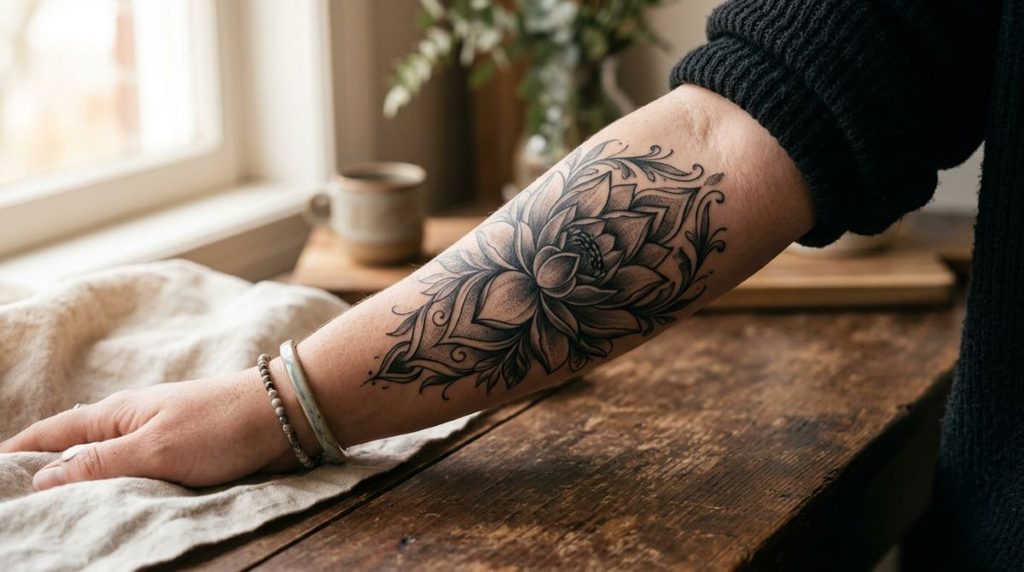
A lotus flower can create a balanced cover-up with broad petals and a naturally darker center. The petals can spread over the original tattoo while the center receives deeper shading.
This design works well for women who want something feminine without choosing a traditional rose. A lotus can look minimal, ornamental, realistic, or highly detailed depending on the linework.
For a simple version, use one large lotus with a few small leaves. This can keep the appointment shorter than a large floral arrangement.
The shape is suitable for the forearm, shoulder, thigh, chest, or upper back. A vertical lotus can also follow the length of a narrow tattoo.
If the original ink is very dark, your artist may suggest more black in the center. Avoid trying to recreate the shading yourself at home. Use your DIY planning time for placement sketches instead.
Print a photo of your tattoo and draw several lotus shapes over it. Compare wide petals with narrow petals before discussing your favorite version with the artist.
16. Dagger and Rose Cover-Up
A dagger and rose design can turn an unwanted tattoo into something bold and decorative. The dagger creates a strong central shape, while the rose and leaves soften the surrounding edges.
This concept works well when the old tattoo has a vertical or elongated shape. The blade can cover the central portion, while flowers extend around the sides.
Black-and-gray shading can provide substantial coverage without requiring bright color. If you prefer color, a small amount in the rose can create contrast.
To keep costs reasonable, use one rose rather than several flowers. You can also limit decorative details around the handle.
This tattoo can work on the forearm, thigh, calf, upper arm, or shoulder. The final size should be based on the tattoo underneath.
Before booking the session, ask your artist whether the existing ink can be covered directly or whether another approach would work better. Some old tattoos are extremely dark, and a larger or darker design may be required.
17. Large Botanical Branch
A large botanical branch can cover an old tattoo while creating a natural shape that follows the body. Broad leaves provide more coverage than very thin foliage.
You can choose olive-style branches, eucalyptus-inspired leaves, tropical foliage, or a custom mix of shapes. The style can stay black and gray for a refined appearance.
For tattoos with uneven edges, a curved branch can be particularly useful. It can move around the old design rather than forcing everything into one compact shape.
If you want a lower-cost option, choose fewer leaves with larger shapes. Tiny leaves require more individual linework and can take longer.
A branch works beautifully on the forearm, collarbone, shoulder blade, thigh, or calf. You can also extend the branch slightly beyond the original tattoo so the cover-up looks intentional.
A simple phone sketch can help you test the direction. Draw a curved line over a photo of your tattoo, then add a few large leaves. Bring the rough idea to your artist for professional adjustment.
18. Mandala With Deep Center Details
A mandala can cover an older tattoo with a structured circular design. Its layered shapes create many places where your artist can use darker shading.
This style can be adapted to the wrist, forearm, shoulder, thigh, chest, or upper back. A larger mandala gives more space for coverage.
For a simple and affordable version, choose fewer layers rather than a highly detailed design filled with tiny lines. The center can remain darker while the outer sections become lighter.
If you want a softer appearance, floral mandala shapes can add curved petals to the geometric structure. If you prefer a bold look, stronger black sections can make the design more dramatic.
Take care when choosing the size. A very small mandala may not provide enough coverage for a larger tattoo. Your artist can measure the existing ink and suggest a practical diameter.
Use paper sketches to compare circular sizes before your appointment. This can help you avoid choosing a design that feels too small for the area.
19. Skull Framed With Flowers
A skull framed with flowers can create strong coverage while giving an old tattoo a completely different visual direction. The skull provides a broad dark center, while roses or leaves surround it.
This design can be feminine, gothic, artistic, or dramatic depending on the floral details. Soft petals can balance the stronger skull shape.
If you want to control the price, use one skull and two or three flowers rather than creating a large scene. Black-and-gray shading can also simplify the color plan.
This concept works well on larger areas such as the upper arm, thigh, calf, or shoulder. It may be harder to fit on very small tattoos without losing important details.
Before your appointment, decide whether you prefer a realistic skull or a stylized one. Show references for the flowers too. Your artist can then create a composition that matches the size of your old tattoo.
20. Lace-Inspired Ornamental Design
A lace-inspired tattoo can create a delicate appearance while still using darker sections to cover unwanted ink. Curved lines, floral motifs, dots, and shaded shapes can be arranged around the existing tattoo.
This style is useful when you want something decorative rather than a recognizable animal or flower. The design can follow the natural shape of your body.
For stronger coverage, ask your artist to create darker ornamental sections directly over the old tattoo. Lighter lace-like details can then extend beyond those areas.
A simpler version can also be budget-friendly. Choose a single decorative panel instead of a large ornamental sleeve.
This idea works on the upper arm, forearm, shoulder, thigh, or upper back. The shape can be customized to fit the tattoo underneath.
When planning at home, trace the outline of your existing tattoo on paper. Draw curved decorative shapes around it. This can help you see how much space the final piece might take.
21. Fern and Wildflower Cover-Up
Ferns and wildflowers can create a softer cover-up with plenty of natural movement. Fern fronds are especially useful because their layered leaves can extend over old ink while creating a flowing outline.
Small wildflowers can then fill the surrounding space. For stronger coverage, use larger shaded leaves directly over the darkest areas.
This style can look beautiful on the forearm, shoulder, thigh, ankle, or calf. It can also be customized to follow a vertical or diagonal tattoo.
To keep the appointment affordable, choose a few larger botanical shapes rather than dozens of tiny flowers. Black-and-gray ink can also keep the color plan simple.
If you want a hint of color, ask about adding it to only one or two flowers. That creates contrast without turning the entire tattoo into a complex color project.
A DIY planning idea is to draw several fern shapes on paper and cut them out. Place them around a printed photo of your existing tattoo to experiment with direction and size before your appointment.
22. Phoenix With Layered Feathers
A phoenix can transform a larger unwanted tattoo into a dramatic new piece. Its wings, feathers, and flowing tail create plenty of surface area for covering old ink.
The darkest sections can be placed across the original tattoo, while lighter feather details extend around the edges. This can make the cover-up feel like a planned composition rather than a simple replacement.
A phoenix works best when there is enough space for the design to breathe. Thighs, upper arms, backs, and calves can provide room for the wings and tail.
If you have a limited budget, choose a single phoenix without a large background. You can also use black-and-gray shading instead of several colors.
Before your appointment, decide whether you prefer a side-profile bird, rising phoenix, or spread-wing design. Bring several references that show the body position you like.
The final shape should be based on your existing tattoo. A larger phoenix may be necessary if the old ink is wide or heavily saturated.
23. Custom Floral Cover-Up Designed Around Old Ink
A custom floral cover-up can be the right approach when your existing tattoo has an unusual shape or multiple elements. Instead of choosing a design first, the artist can build the new artwork around the exact ink already on your skin.
Start by choosing a general direction, such as roses, peonies, wildflowers, leaves, or tropical flowers. Then let the artist decide where larger petals and darker shadows should sit.
This approach can produce a more natural result because the old tattoo becomes part of the design plan. The artist can use stronger sections where more coverage is required and lighter areas where less coverage is needed.
For a budget-friendly custom tattoo, limit the concept to one main flower type. Avoid adding multiple decorative elements unless they serve a purpose.
You can prepare by taking clear photos of the tattoo and collecting a few references for flowers, shading, and placement. A rough DIY sketch can help communicate your preferred direction, but the final drawing should be created specifically for your body.
A good cover-up does not have to erase every trace of the past tattoo visually. It can turn the area into artwork that feels personal, intentional, and much more like your style today.
Conclusion
The best cover up tattoos for women start with the tattoo you already have and build a new design around its size, darkness, shape, and location. Roses, peonies, botanical branches, butterflies, moths, snakes, birds, ornamental patterns, and larger custom pieces can all create different coverage options. Before choosing a design, talk with an experienced tattoo artist and ask how much coverage is realistic for your particular ink. Keep your budget in mind by limiting unnecessary details, choosing a focused composition, and planning the size carefully. A thoughtful cover-up can turn unwanted old ink into artwork that feels personal, intentional, and much more like your style today.