12 Arm Cover Up Tattoos for Women That Give Old Ink a Fresh Look
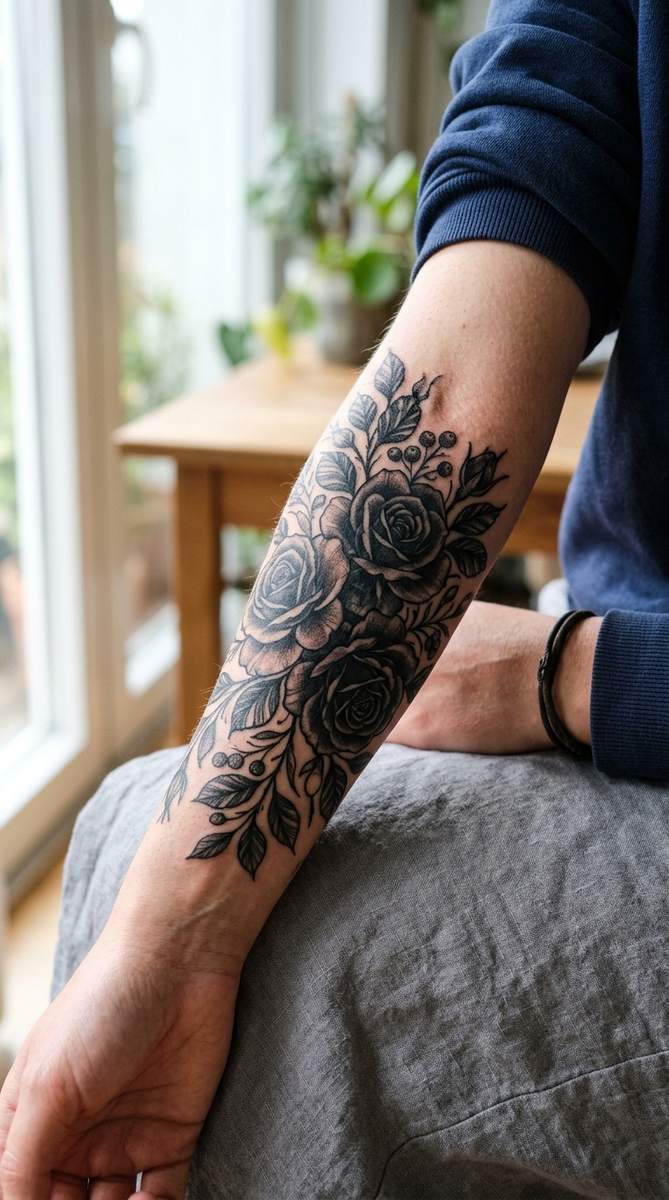
Living with an arm tattoo you no longer love is draining. Maybe it is a name from an old relationship, a small tattoo that lost its meaning, or a design that felt right at twenty but feels wrong now. Arm cover up tattoos for women turn that old ink into art you actually want to show off.
A cover-up is more than a bigger tattoo placed on top. Your artist builds the new design around your old lines, using darker tones, dense shading, and larger shapes. The eye goes to the new art instead of what sits underneath. The forearm and upper arm give plenty of room to work, which makes the arm one of the most forgiving spots for a cover-up. If you are still comparing locations, our tattoo placement guide breaks down the pros and cons of each spot.
Before you book, it helps to see real options. The twelve ideas below are styles artists use every day for cover-ups — florals, blackwork, animals, and wrap-around pieces sized to genuinely hide old ink. Save your favorites and bring them to a consultation. A good artist will tell you honestly what can be covered and how many sessions it will take.
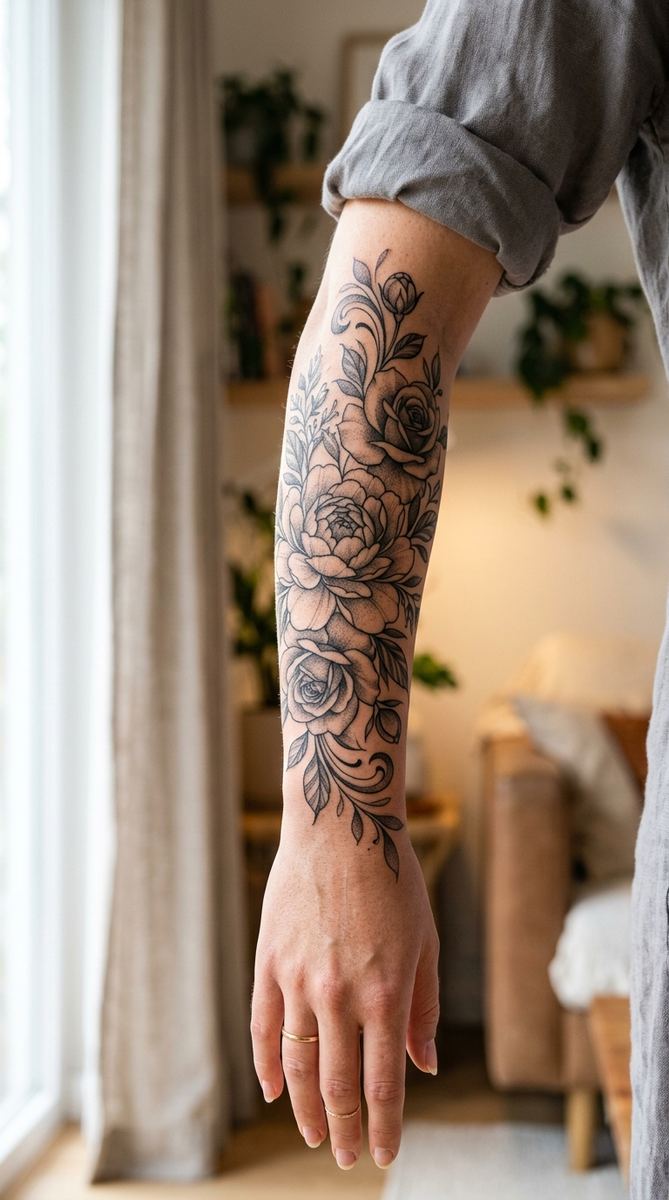
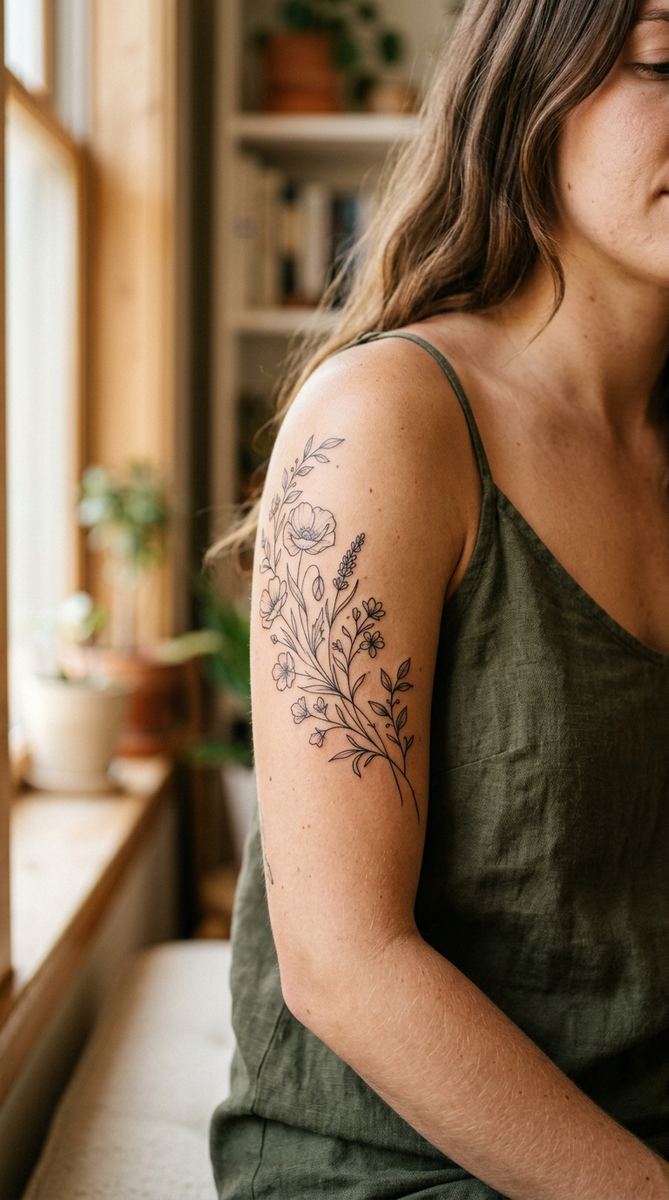
Cascading Forearm Florals
Bold florals are the most popular cover-up choice for a reason. Layered petals create natural shadows that hide old lines underneath. A cascading design flowing from elbow to wrist can cover script, small symbols, and faded color with ease.
Ask your artist to mix two or three flower sizes. Large blooms like peonies and roses sit in the foreground, while smaller buds and leaves fill the space around your old tattoo. That overlap is what does the hiding. Dark background shading makes old ink fade from view even faster.
Budget tip: bring three to five reference photos to your consultation. Clear references cut down design time, which can lower the design fee. Ask whether the quote covers the full piece or is priced per session.
Aftercare stays simple and cheap. Wash gently with unscented soap, pat dry, and apply a thin layer of fragrance-free moisturizer twice daily. Keep the forearm out of direct sun for at least two weeks. After healing, daily sunscreen protects the dark shading from fading early.
This style suits women who want something feminine yet bold. It pairs with any outfit, and the forearm placement lets you enjoy the new art every single day.

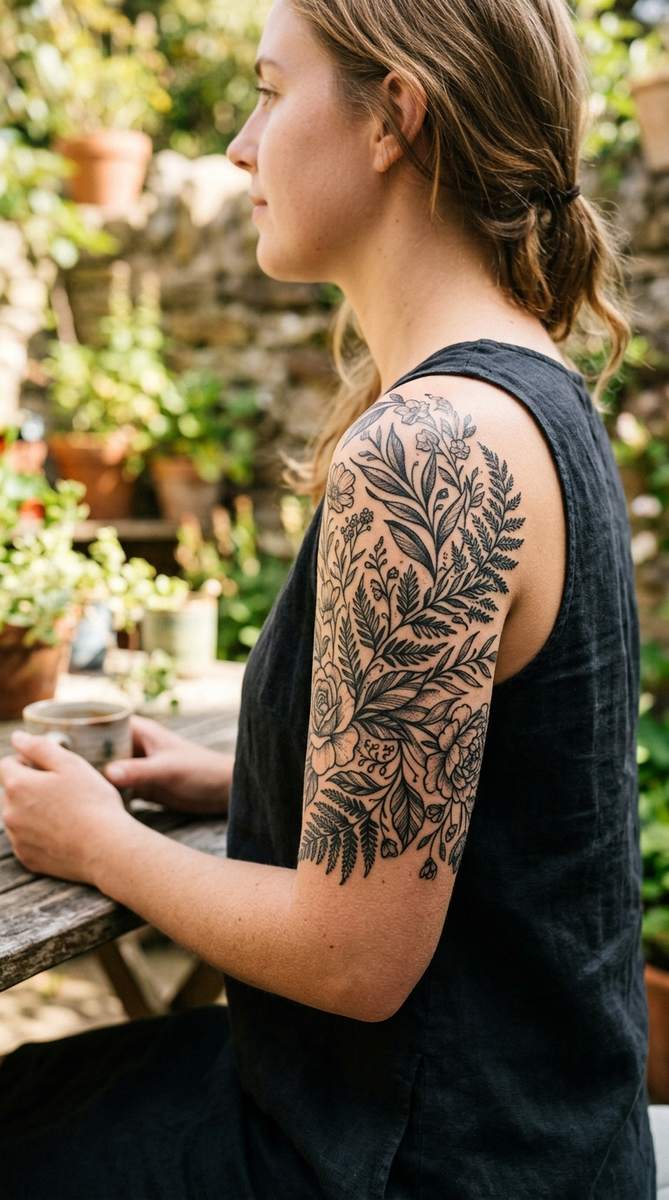
Upper-Arm Botanical Half Sleeve
Botanical designs are a quiet powerhouse for cover-ups. Twisting branches and layered leaves create so much visual texture that old lines simply get lost. This style works especially well over faded color tattoos that have gone muddy with age.
The upper arm is ideal because the skin is thicker and the canvas is wide. Your artist can wrap branches all the way around, which means old ink gets surrounded on every side. Dark greens, deep browns, and black shading do the heavy lifting. Ask for solid fill behind the leaves rather than wispy outlines — solid areas hide far more.
Budget tip: half sleeves usually take two or three sessions. Ask whether the artist charges per session or gives a flat project price, then compare. Booking the next session before you leave the studio can sometimes lock in the same rate.
Healing is straightforward. Wear loose sleeves for the first week so fabric does not rub the new ink. Wash once or twice daily, moisturize lightly, and skip the gym for a few days to avoid sweat on the new tattoo. Sunscreen after healing keeps the dark tones rich for years.

Wrap-Around Floral Vine
A vine that wraps all the way around the forearm is a clever way to cover several old tattoos at once. The continuous flow pulls the eye around the arm, so no single spot holds attention. Old bands, small symbols, and scattered pieces all disappear into the design.
The secret is density. Ask your artist for thick stems, overlapping leaves, and clusters of small flowers rather than one thin trailing vine. Thin lines cannot hide much. A vine with dark fill between the leaves works like camouflage for whatever sits below.
Budget tip: wear short sleeves to your consultation so the artist can see the full arm and plan the wrap accurately. A well-planned stencil saves touch-up time later, which saves you money. Ask the artist to photograph the stencil placement so you can approve the flow before any ink goes in.
Aftercare mirrors any forearm tattoo. Keep it clean, moisturized, and out of the sun while it heals. Because the design circles the arm, sleep with the arm uncovered for the first few nights so bedding does not stick to the new ink.

Blackout Band With Floral Cutouts
When old ink is too dark or dense for anything else, a blackout band is the answer. Solid black covers everything — old tribal bands, dark lettering, and heavy shading all vanish under it. Floral shapes left as bare skin inside the black add beauty and keep the design feminine.
Be honest with yourself about the commitment. Blackout work is bold and permanent in a way that feels different from other styles. Look at healed photos of the artist’s blackwork before you commit, since smooth, even saturation is a skill. Patchy black is hard to fix.
Budget tip: blackout usually takes two or three passes for full saturation. Confirm whether the quoted price includes all passes or charges per visit. This avoids surprise costs halfway through.
Healing blackwork is intense. Expect heavy peeling and some itching as the large solid area heals. Do not pick at the flakes — pulling them can lift ink and leave light spots. Wear soft, loose sleeves and keep the area moisturized with a thin layer of fragrance-free lotion. The result is a striking, modern piece that completely erases the past.
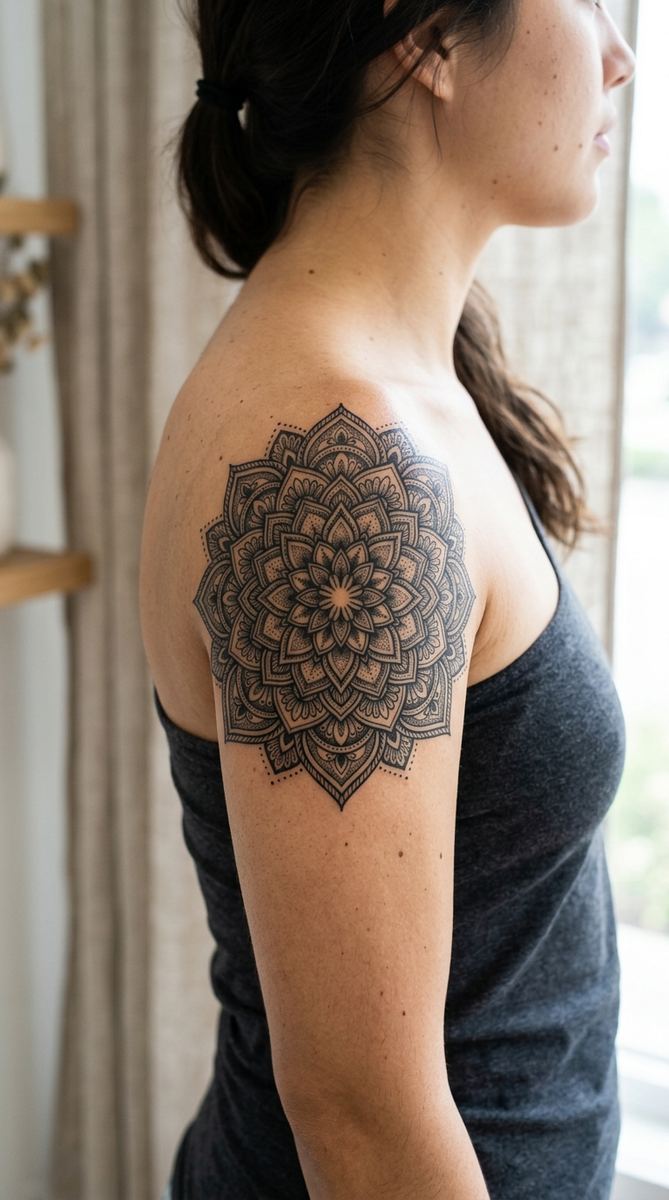
Dark Mandala Shoulder Piece
A mandala radiating from the shoulder cap is one of the most reliable cover-ups for the upper arm. The symmetrical pattern gives the eye a clear focal point, and the dense dotwork shading around the edges swallows old lines. Faded shoulder pieces and old upper-arm designs hide beautifully underneath.
Mandalas work because they are built outward from a center point. Your artist places the boldest lines over your old tattoo and lets the pattern expand onto clean skin. Ask for heavier black in the sections sitting directly over old ink — the artist can fade the shading lighter as the design moves outward.
Budget tip: mandalas are detail-heavy, so ask whether the artist charges hourly or per piece, and get a realistic time estimate. Some artists do the stencil in a separate paid appointment, so ask about that upfront too.
Aftercare is standard but the shoulder moves a lot. Avoid heavy bags on that shoulder for a week and skip workouts that stretch the area. Sleep on the opposite side for the first few nights. Once healed, this placement looks stunning in sleeveless tops and dresses.

Phoenix Rising on the Bicep
A phoenix is the perfect symbol for a cover-up — a creature reborn from its own ashes. The layered feathers create deep texture that hides dark old ink, and the upward sweep of the wings draws the eye along the arm. Old bicep tattoos with heavy black or dark color disappear under the plumage.
Placement matters here. The phoenix body can sit directly over the old tattoo while the wings and tail feathers spread onto clean skin around it. Ask your artist to use the darkest shading in the body and let the feathers lighten toward the edges. This contrast is what makes the old design vanish.
Budget tip: a full-color phoenix costs noticeably more than black and gray because color packing takes extra sessions. A black and gray phoenix with one small color accent still looks striking and keeps the price down. Decide on color before the consultation so the quote is accurate.
Healing a bicep piece is easy compared to bonier spots. Keep arm movement gentle for a few days and avoid lifting heavy objects with that arm. Moisturize lightly and the feathers will heal crisp and clean.

Butterfly and Moth Sleeve Panel
Large butterflies and moths are made for cover-ups. The wing patterns are full of natural detail — spots, lines, and gradients — that break up old tattoo lines underneath. A moth with dark wings can hide even dense old ink, while lighter butterflies work over faded pieces.
Size is everything with this style. The wings must be larger than the old tattoo, with at least an inch of new design extending past the old edges on every side. Ask your artist to place the darkest part of the wings directly over the darkest part of your old ink. The body of the insect can anchor the center while the wings do the covering.
Budget tip: crisp wing detail depends on the artist’s linework, so look at healed photos of their fine line tattoos before booking — not just new photos. New tattoos always look sharp. Healed photos show you what your cover-up will actually look like in a year. A slightly more expensive artist with proven healed work is cheaper than a cheap cover-up that has to be fixed later.
Aftercare is simple. Keep the area clean and moisturized, and resist scratching as the fine detail heals. Wing edges heal fastest when left alone.
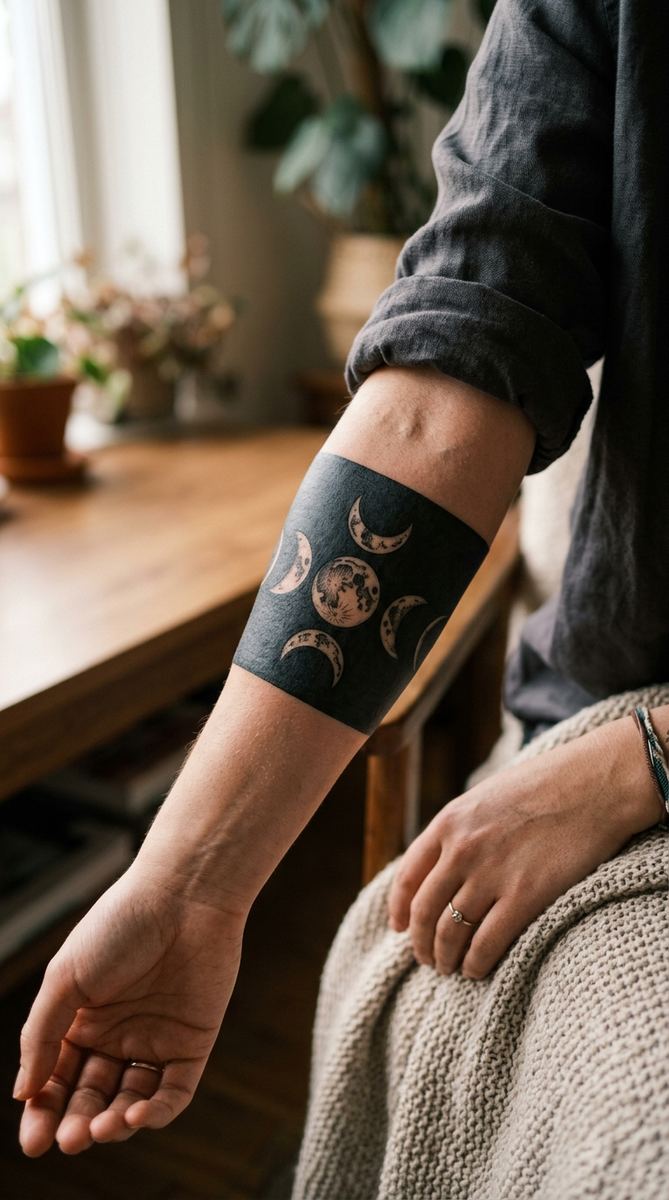
Moon Phases With Heavy Blackwork
A band of moon phases set against solid black is a striking way to cover old wrist and forearm tattoos. The dense black background does the real work — it swallows old lines completely. The moons themselves are left as bare or lightly shaded skin, so they glow against the darkness.
This style suits women covering old wrist pieces, which are notoriously hard to hide because the skin is thin and the area is small. A wrap-around band gives the artist enough dark coverage to handle even stubborn old ink. The celestial theme adds meaning too — cycles, change, and new beginnings fit a cover-up story well.
Budget tip: solid blackwork takes multiple sessions to saturate fully. Ask how many sessions the artist expects and whether touch-ups within the first year are included. Some artists include one free touch-up, which is worth asking about.
The wrist heals slowly because it moves constantly. Keep bending to a minimum for the first few days and avoid bracelets or watches over the new tattoo. Moisturize often since blackwork can feel tight as it heals. The result is bold, modern, and completely transformative.

Koi Fish Swimming Up the Arm
A koi swimming up the arm is a classic cover-up for good reason. The overlapping scales create dense texture that masks old lines, and the flowing water around the fish gives the artist dark, shaded areas to work with. Old forearm designs — script, symbols, even faded color — hide well beneath the scales.
Direction matters. A koi swimming upward symbolizes perseverance, which suits anyone covering a tattoo tied to a hard chapter. Ask your artist to curve the fish body so the thickest part of the design sits over your old ink. The head and tail can flow onto clean skin, which keeps the composition balanced.
Budget tip: full-color koi with reds and oranges costs more and takes more sessions. A black and gray koi with one small red accent gives you the traditional look at a lower price. Discuss the accent placement during the consult so it is included in the quote.
Koi tattoos heal like any forearm piece. Keep the arm out of chlorinated water for at least three weeks and avoid soaking in baths. Quick showers are fine. Once healed, the bold scales hold up beautifully for years with basic sunscreen.
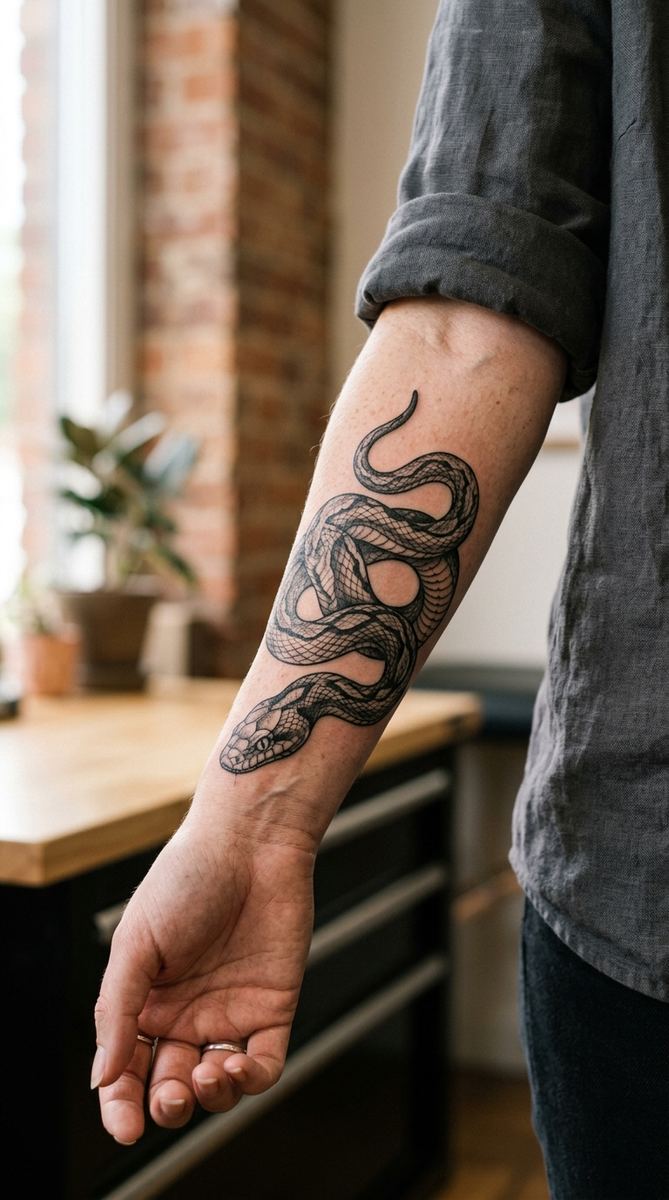
Snake Coiled Around the Forearm
A snake coiled around the forearm is a powerful cover-up choice. The repeating scale pattern is one of the best textures for hiding old ink — every scale is a small dark shape that breaks up whatever sits below. Old script and small scattered designs vanish under the coils.
The wrap-around nature is a big advantage. Your artist can position the thickest part of the snake’s body directly over the old tattoo and let the coils flow naturally around the arm. Ask for detailed scale work rather than a smooth, simple snake — the detail is what does the hiding. Dark shading between the coils adds even more coverage.
Budget tip: snake length is adjustable, which means the price is too. Ask the artist to size the snake to cover your old tattoo exactly, without extra coils you do not want. Fewer coils mean fewer hours and a lower bill. Get the size agreed in the stencil stage.
Aftercare takes a little patience. The design wraps the whole arm, so avoid tight sleeves and sleeping on that arm for the first week. Wash gently, moisturize lightly, and let the scales heal without picking. The finished piece looks fierce and elegant at once.

Forest Scene With Dense Tree Cover
For large old tattoos that smaller designs cannot hide, a forest scene is a strong answer. Layers of dark pine silhouettes create deep, solid coverage across the whole upper arm. Old tribal pieces, large faded color work, and outdated designs disappear into the tree line.
The beauty of a forest is its flexibility. Your artist can place the darkest, densest trees directly over the old ink and let the scene open into lighter sky or mist on clean skin. Birds, a moon, or distant mountains add depth without weakening the coverage. Ask for solid black in the foreground trees — that is where the hiding happens.
Budget tip: large scenic pieces usually take three or more sessions. Ask about a package rate for booking multiple sessions upfront — some artists discount the total when you commit to the full project. Space sessions four to six weeks apart so the skin heals fully between visits.
Healing a large piece takes patience. The area may feel tight and look cloudy for a couple of weeks. Keep it moisturized, wear loose clothing, and avoid sun completely during healing. The result is a dramatic half sleeve with real depth.
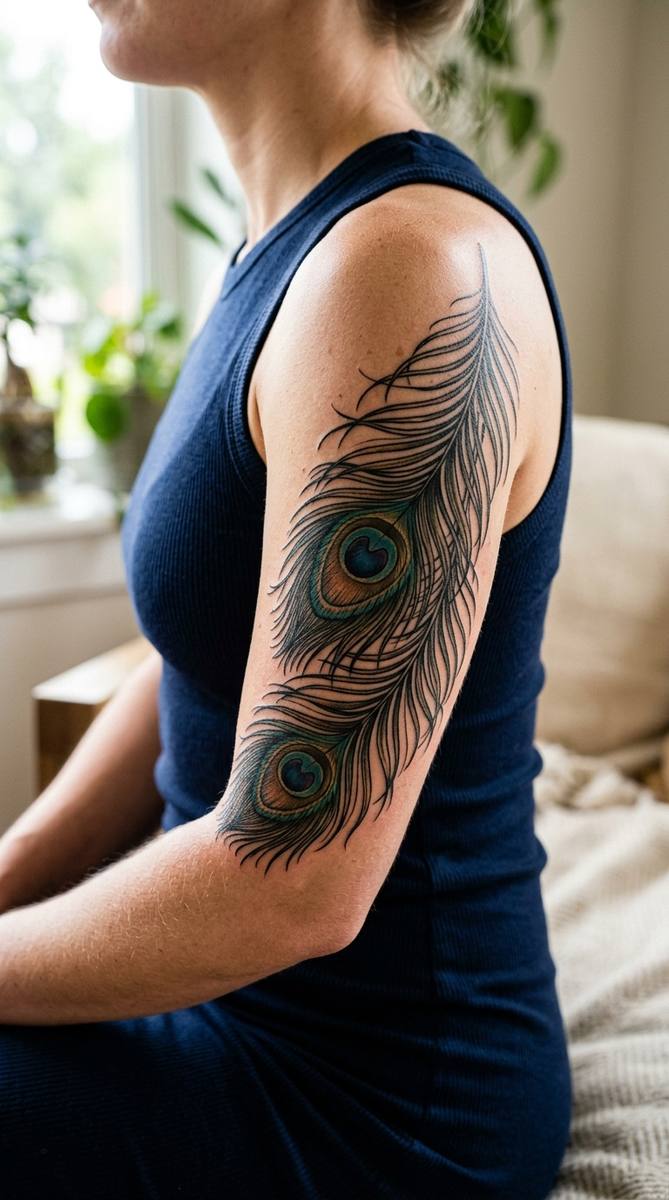
Peacock Feather Fan
A fan of peacock feathers is a gorgeous way to cover old upper-arm ink. Each feather has a natural eye pattern that pulls focus, and the layered barbs create dense detail that hides old lines. The feathers can spread wide enough to cover even larger old designs.
This style works best when the old tattoo sits high on the arm near the shoulder. Your artist fans the feathers outward from that point, placing the darkest feather bases over the old ink. The eye patterns then draw all attention to the new art. Ask for strong dark outlines around each feather — bold lines do the real covering.
Budget tip: full-color peacock feathers are stunning but pricey. A black and gray version with teal and gold accents only in the feather eyes gives you the signature look for less. Agree on exactly which parts get color before the artist starts, so the quote stays accurate.
Aftercare follows the usual routine. The shoulder area moves with every arm motion, so keep movement gentle for the first week. Moisturize lightly, protect from sun, and the feather detail will stay crisp for years.
Conclusion
Old ink does not have to define your arm forever. Each of these twelve cover-up ideas uses dark shading, bold lines, and smart placement to turn a tattoo you hide into one you love showing off. The right choice depends on your old design’s size, darkness, and location — which is exactly what a consultation sorts out. That is why arm cover up tattoos for women start with research like this, not with a walk-in appointment.
Take your favorite ideas to an experienced cover-up artist, ask honest questions about sessions and pricing, and give the new piece proper aftercare. With the right plan, your arm gets a completely new story. If your old ink sits on your lower back rather than your arm, our lower back cover up tattoos for women list has twelve ideas made for that spot. Save this list, book that consult, and start the transformation. Ready to go bigger? These upper arm sleeve tattoos for women showcase stunning full-sleeve designs. For ink that flows from shoulder to arm, shoulder and upper arm tattoos for women offer beautiful inspiration. If you are planning a cover-up with a friend, these meaningful friendship tattoos celebrate your bond beautifully. For something truly one of a kind, these unique friendship tattoos create an unforgettable shared design.
Keep exploring: olive branch arm wrap tattoos, olive branch arm tattoos.