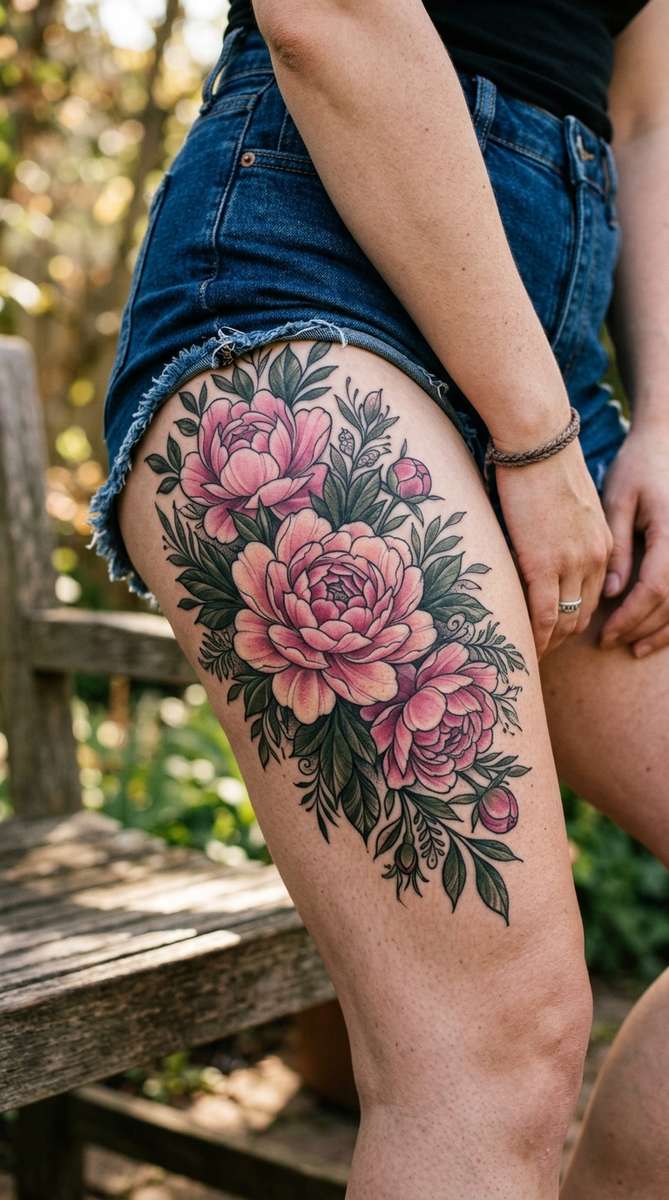
12 Forearm Cover Up Tattoos for Women That Hide Old Ink Beautifully

The forearm is prime real estate — visible, flat, and perfect for showing off ink. It is also one of the most common spots for tattoos people later want to change. Forearm cover up tattoos for women work so well because the area gives artists a long, smooth canvas with room to build designs that fully absorb old ink. Whether your old piece is a faded symbol, an ex’s initial, or a design that never healed quite right, these twelve ideas turn forearm regret into forearm pride. Each one is chosen for how it handles the forearm’s shape, visibility, and the practical realities of covering old work there. If your old ink sits on the softer underside of the arm, our inner forearm cover up tattoos for women ideas are designed for that exact spot — and for placements higher up the limb, see our arm cover up tattoos for women roundup.

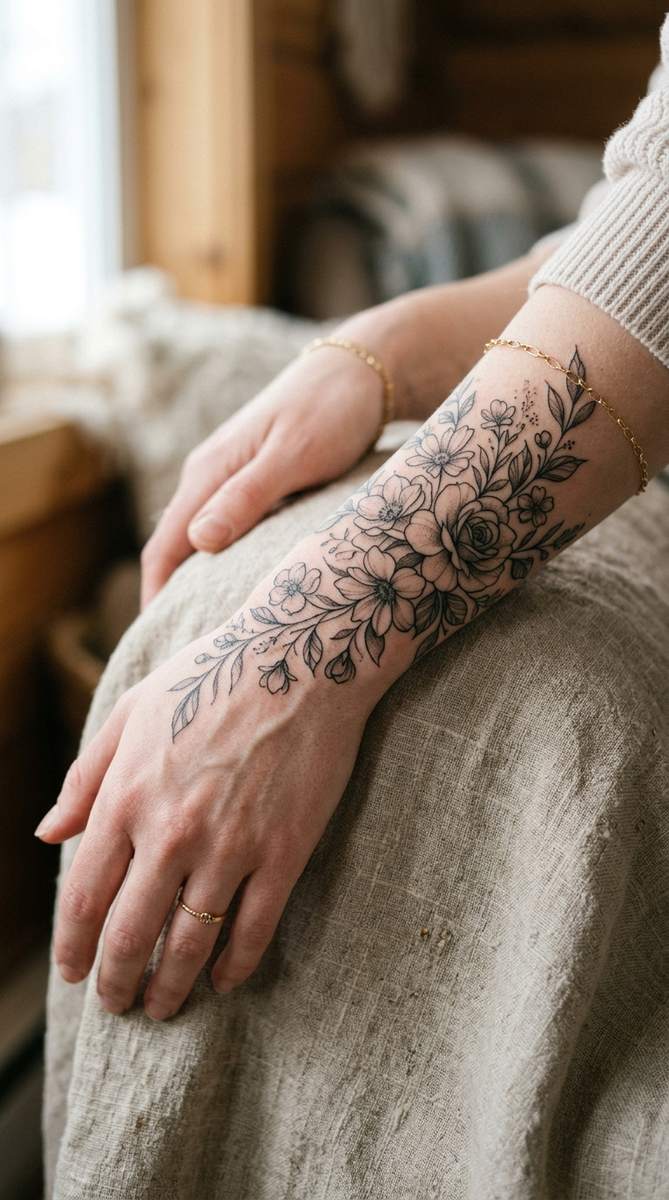
Trailing Floral Vine
A vine that travels the length of your forearm is a natural cover-up shape. Old tattoos on the forearm are often long or scattered, and a trailing vine can weave through all of it — leaves landing on old lines, blooms anchoring the darkest spots, tendrils filling the gaps.
The beauty here is flexibility. Your artist is not locked into one shape. The vine can thicken where coverage is needed and stay delicate where the skin is clear, so the final piece looks organic rather than forced.
Adaptive vine thickness is the concept to discuss. Denser foliage over old ink, airier sprigs over clean skin.
Budget tip: vines are often done in one longer session or two shorter ones — ask which your artist prefers. Longer single sessions can cost less overall than splitting. Wear a loose long sleeve to the appointment for easy coverage on the way home, and keep the new vine moisturized and out of the sun.
Vines age gracefully because their organic shapes have no straight lines to blur. Ask to see the artist’s healed botanical work, not just photos of new pieces. How the leaves look after a year tells you whether the linework was laid in to last.
Koi Fish in Motion
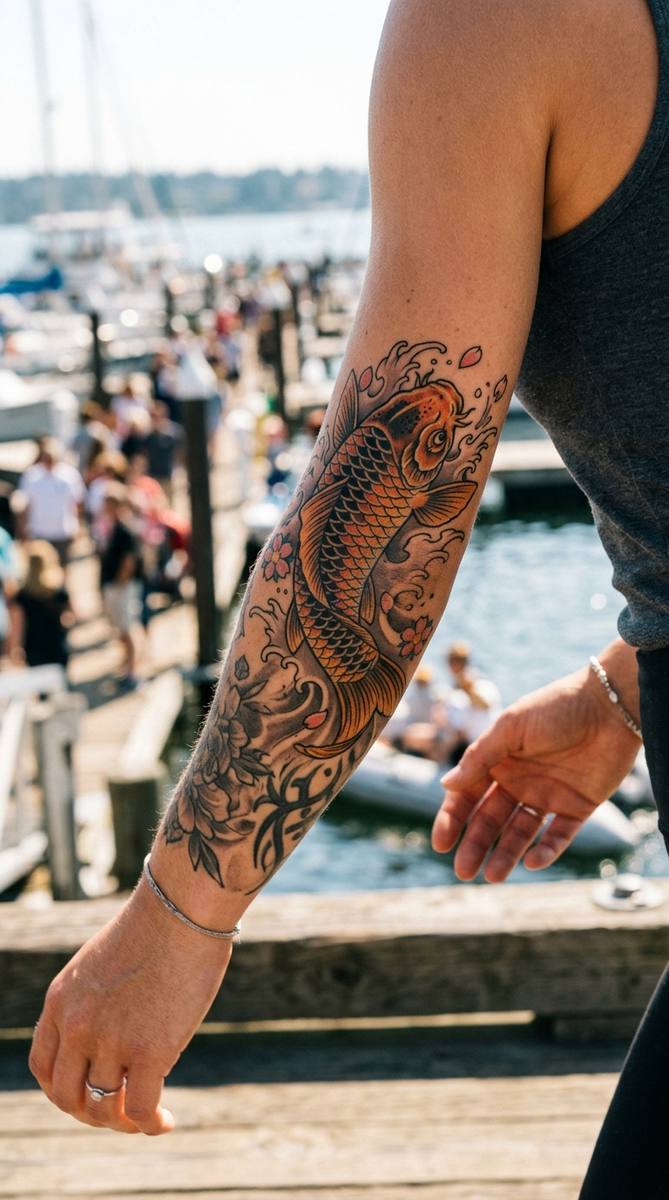
The forearm’s length was made for a swimming koi. The fish’s body follows the arm’s natural line, scales create busy texture that breaks up old ink, and surrounding waves add bonus coverage. It is one of the most dependable forearm cover-ups.
Direction matters. A koi swimming toward the elbow feels like it is moving up your arm; toward the wrist feels like it flows outward. Your artist can also curve the body to dodge or absorb specific parts of the old tattoo.
Body-curve planning lets the fish wrap around problem areas. Bring a photo of your old tattoo so the artist can sketch the curve before you commit.
Budget tip: a forearm koi with water background is a solid medium piece — budget for one to two sessions. Morning appointments help for longer sits. Skip arm workouts for a few days after; flexing new ink is uncomfortable and can disturb healing.
Water backgrounds give you flexibility on size. If the budget is tight, the koi itself can be the first session and the waves added later — the fish looks complete alone. Staged work like this keeps quality high without financial strain.

Bold Rose Cluster
When the old forearm tattoo is dark, roses answer with darkness of their own. A cluster of blooms — not just one lonely flower — gives your artist multiple deep centers to bury old ink under. Thorny vines and shadowed leaves extend the coverage along the arm.
Realism sells this design. Smooth gradients and deep shadows create a richness that makes old lines simply vanish into petal folds. From a few feet away, all anyone sees is beautiful roses.
Multi-bloom clustering beats a single rose for coverage every time. More centers, more shadows, more hiding power.
Budget tip: realistic clusters are a premium choice — expect a higher quote and possibly two sessions. It pays to choose an artist whose healed realism you have actually seen. Aftercare is standard but important: fragrance-free lotion, no sun, and loose sleeves while it settles.
Thorns are optional, but they add wonderful dark detail that helps coverage. If you like a slightly edgier feel, ask for prominent thorns along the stems. If you prefer softness, leaves alone do the job. The choice changes the mood completely.

Ornamental Blackwork Band
A blackwork band turns the whole forearm into a statement. Bold patterns, dotwork gradients, and geometric shapes wrap 360 degrees around the arm, leaving old ink nowhere to hide. It is decisive, modern, and incredibly effective.
Bands suit old tattoos that wrap or sprawl, since the design does not need to fit inside the old shape — it simply overtakes the entire area. The symmetry also looks intentional, like the band was always the plan.
Full-wrap continuity is essential. The pattern must line up where it meets around the arm, so choose an artist experienced with wraparound designs.
Budget tip: bands are priced by coverage area and density — get the total in writing. Because the work circles the arm, you will be repositioning during the session; wear something comfortable. Healing a band means keeping the whole forearm clean and moisturized, so stock up on gentle lotion beforehand.
Because a band is visible from every angle, the pattern’s rhythm matters. Ask the artist to show you the full repeat unit before starting. A well-planned repeat feels seamless all the way around, while a rushed one shows its joins. Confirm the repeat suits your arm.

Butterfly Meadow Scene
A meadow scene scatters coverage across the whole forearm. Multiple butterflies, wildflowers, and grasses create a lively, busy composition where old ink gets lost in the best possible way. No single element carries the burden — they all share it.
This is a gentler alternative to heavy blackwork. The overall feel stays light and feminine while the combined density of many small elements still hides effectively. It works best over faded or medium-dark old tattoos.
Scattered element density is the strategy. Every part of the old tattoo should sit under a butterfly, bloom, or grass tuft.
Budget tip: scenes like this build up element by element, which suits hourly pricing. Discuss a rough hour estimate upfront so the budget stays predictable. Small elements heal fast — keep the routine simple with gentle washing and light moisturizer.
Scenes with many elements benefit from a clear focal point — usually the largest butterfly. Decide with your artist which element leads, then build the meadow around it. A scene without hierarchy can feel scattered; one strong anchor pulls everything together.

Peony and Bud Branch
A peony branch climbing the forearm combines the cover-up power of big blooms with an elegant vertical flow. Open flowers, tight buds, and leaves alternate along the branch, giving your artist varied dark shapes to place over old ink.
Branches are forgiving designs. If the old tattoo has an awkward shape, the branch simply grows around it — a bud here, a leaf there — until the old lines are part of the garden.
Alternating bloom and bud rhythm creates natural dark-light variation that camouflages old ink without looking heavy.
Budget tip: a branch from wrist toward elbow is a medium piece, usually one to two sessions. Ask your artist to draw the full branch first so you approve the flow. For aftercare, the forearm’s constant movement means keeping it moisturized matters — dry skin cracks new ink faster on joints.
Buds are useful for covering small leftover bits of old ink at the design’s edges. Point out every part of the old tattoo, even faint traces, so the artist can place a bud or leaf over each one. Full disclosure at the consultation prevents ghost lines later.
Hummingbird Mid-Flight
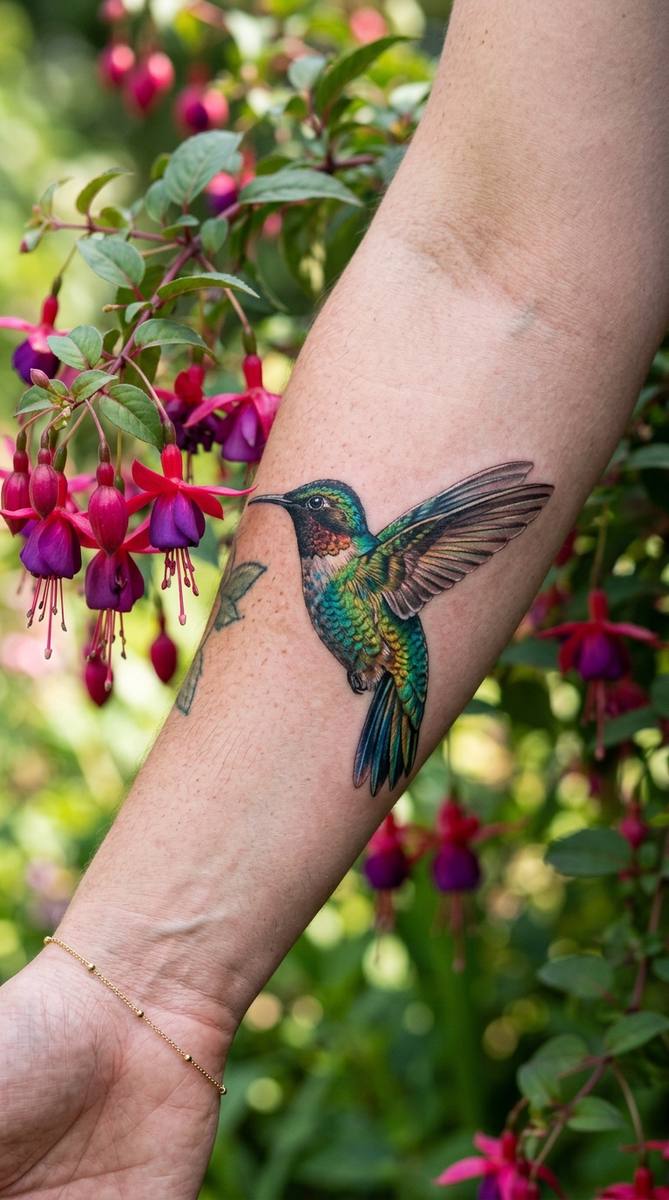
Small old forearm tattoos meet their match in a hummingbird. The bird’s tiny, dense body plus surrounding blossoms concentrate a huge amount of detail into a few inches. Nothing about the old tattoo survives that much focused artistry.
Hummingbirds feel joyful and alive — a lovely energy for replacing something you would rather forget. The hovering pose also fits the forearm’s flat plane beautifully.
Concentrated micro-detail is what makes small cover-ups work. Every feather and petal should be doing coverage duty.
Budget tip: do not let the small size fool you — dense detail takes time and skill, so the quote may be higher than expected. One session is usually enough. Because it is small, aftercare is quick, but keep sunscreen on it once healed; tiny color details fade faster in sun.
The hovering pose calls for negative space around the wings to read clearly. Make sure the design does not crowd the bird — a little bare skin around the wings makes the motion pop. Your artist should balance dense coverage areas with breathing room elsewhere.
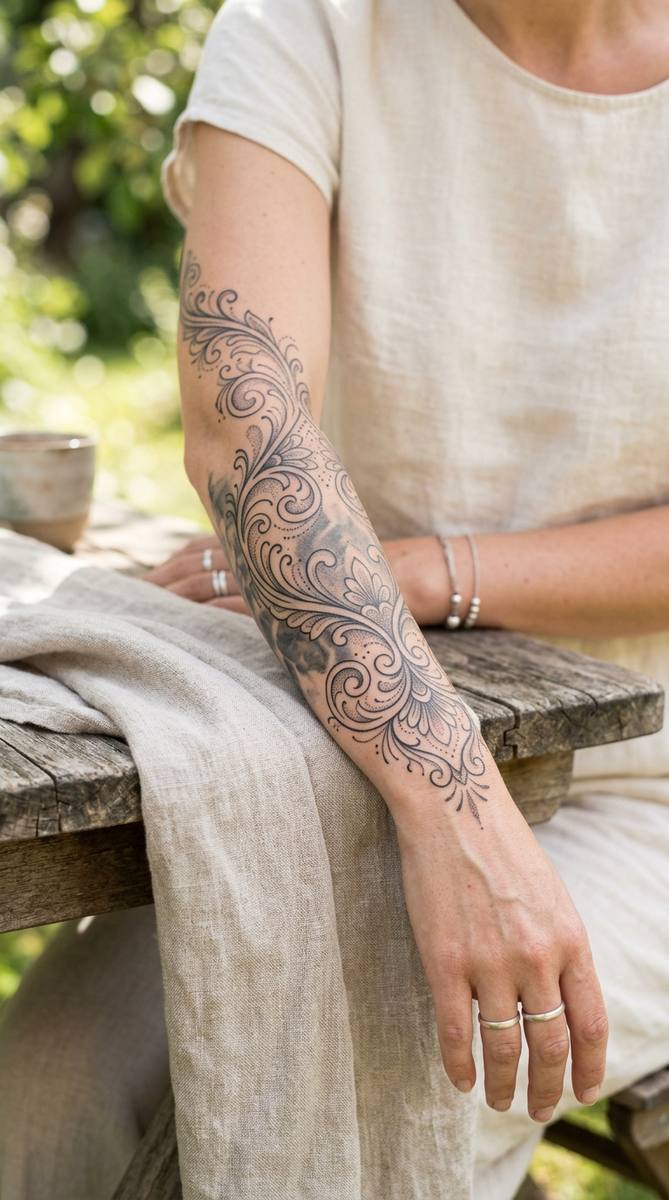
Lace-Inspired Filigree Wrap
Filigree wraps the forearm in something resembling fine lace gloves. Swirling lines, dots, and delicate curls build a semi-sheer pattern that is denser than it looks — the layered linework hides old ink while keeping an airy, feminine feel.
This suits old tattoos that are faded rather than bold. The filigree does not rely on solid black, so very dark old ink might peek through. Honest assessment at the consultation prevents disappointment.
Layered sheer linework builds coverage through overlap. Two or three passes of fine pattern equal the hiding power of one bold shape.
Budget tip: filigree is slow, careful work — hourly rates apply and hours add up. A forearm wrap might take three to four hours total. Split it into two sessions to stay comfortable and spread the cost. Gentle aftercare only: pat dry, never rub.
Filigree wraps look different on every wrist because bone structure varies. Ask the artist to adapt the pattern width to your arm rather than copying a reference exactly. A design fitted to your anatomy always looks better than one traced from someone else’s photo.
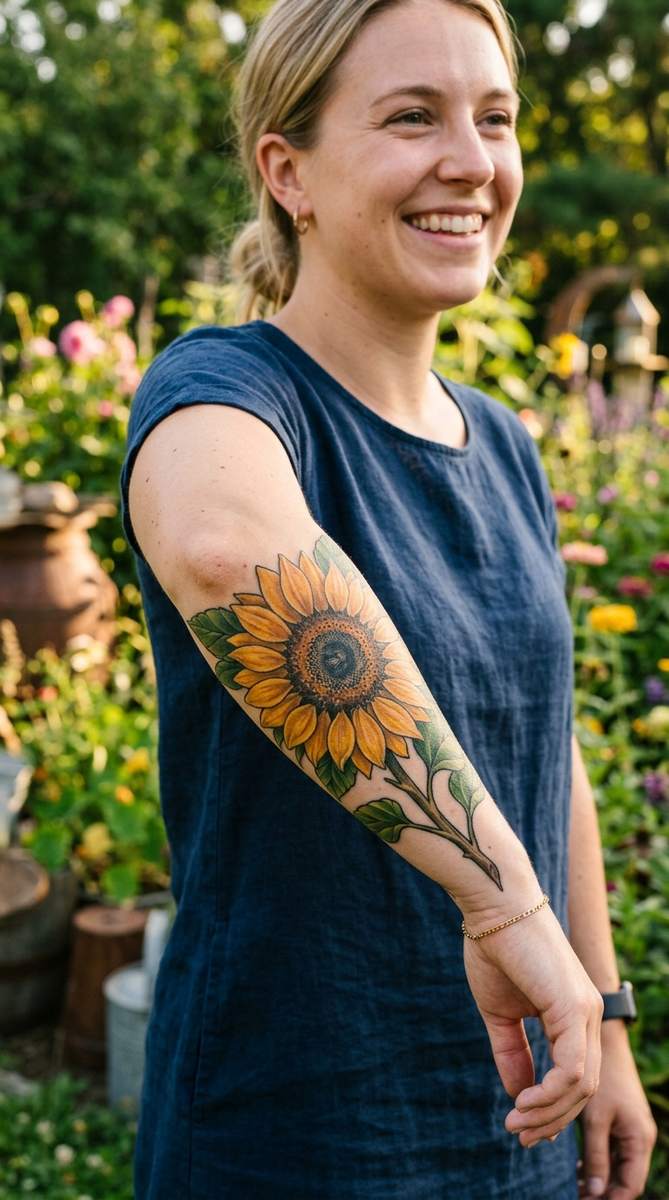
Sunflower Statement
A sunflower is happiness with hiding power. The huge bloom gives your artist a broad dark center — perfect for sitting over the worst of the old ink — while bold petals radiate outward to cover the rest. Leaves extend the design along the arm.
Sunflowers suit round or square old tattoos especially well, since the bloom’s shape naturally contains them. The warm, golden palette also photographs beautifully, if you love sharing your ink.
Dark-center anchoring is the technique: the seed head’s deep texture goes directly over the darkest old lines.
Budget tip: sunflowers are often single-session pieces, making them budget-friendly. Yellows and golds may need a touch-up sooner than dark tones, so ask about the artist’s touch-up policy. Keep the new piece out of direct sun — ironic, but healing skin burns easily.
Sunflower centers are naturally dark and textured — ideal cover-up territory. If your old tattoo has one particularly stubborn spot, ask the artist to center the seed head directly over it. One well-placed bloom can do the work of an entire background.

Dragonfly Over Water
A dragonfly skimming water ripples brings calm, horizontal energy to the forearm. The long body covers the old tattoo’s core while veined wings and concentric ripples spread coverage outward. Cool blues and deep blacks keep it elegant.
Water ripples are a clever cover-up device. Their repeating curved lines break up old shapes underneath, and the artist can add more ripples wherever extra hiding is needed.
Ripple-pattern disruption confuses the eye’s reading of old lines. It is camouflage through pattern, not just darkness.
Budget tip: this is a medium piece with a moderate quote — the linework is steady rather than painstaking. One session usually does it. Ripples heal cleanly with basic care: wash gently, moisturize lightly, and avoid soaking the arm until the skin settles.
Ripples can be extended in a future session if you ever want a larger piece. Mention this possibility at the design stage so the artist leaves the composition open-ended rather than closing it off. Planning for growth keeps your options open down the road. Even a few extra ripple lines sketched lightly at the planning stage show you what the larger version could become.
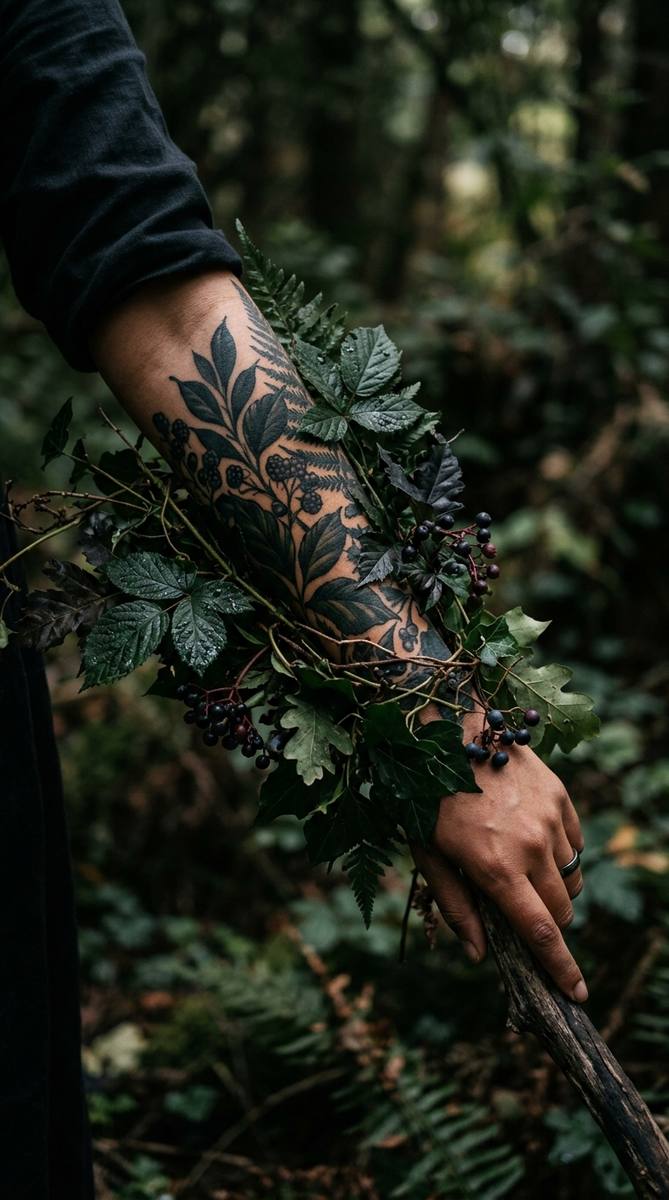
Dark Leaves and Berries
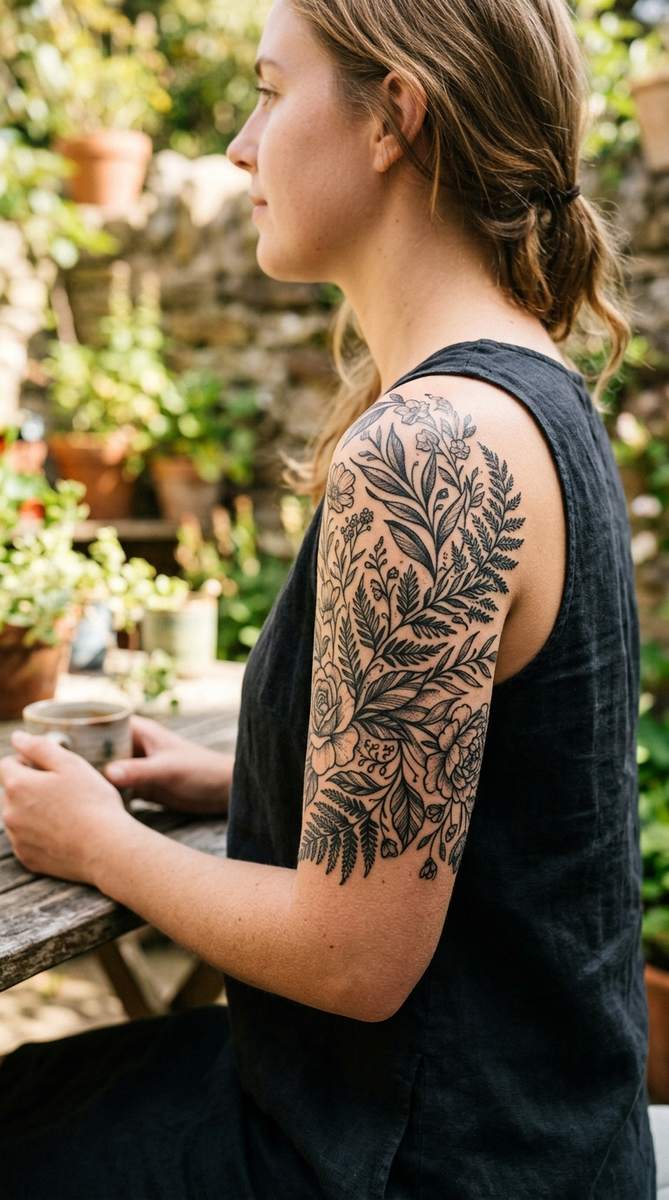
Sometimes the most striking cover-up is not a flower at all. Dense clusters of dark leaves, berries, and shadowed foliage create a rich botanical mass that absorbs old ink completely. It feels woodland, mysterious, and utterly modern.
This is ideal for old tattoos with irregular shapes. Foliage has no fixed form — it grows wherever the artist requires it to, filling awkward corners that structured designs cannot.
Freeform foliage growth adapts to any old shape. Show your artist the old tattoo and let them sketch leaves directly around its edges.
Budget tip: foliage pieces scale flexibly — start with a core cluster and add more in later sessions if the budget is tight now. Each session stands alone as a finished look. Dark greens and blacks age well, so this is a long-term investment that holds its depth.
Berries add dots of deep color that break up old lines beautifully. Ask for varied berry sizes — uniform dots look mechanical, while natural variation feels organic. This small detail lifts the whole piece from simple pattern to living artwork.
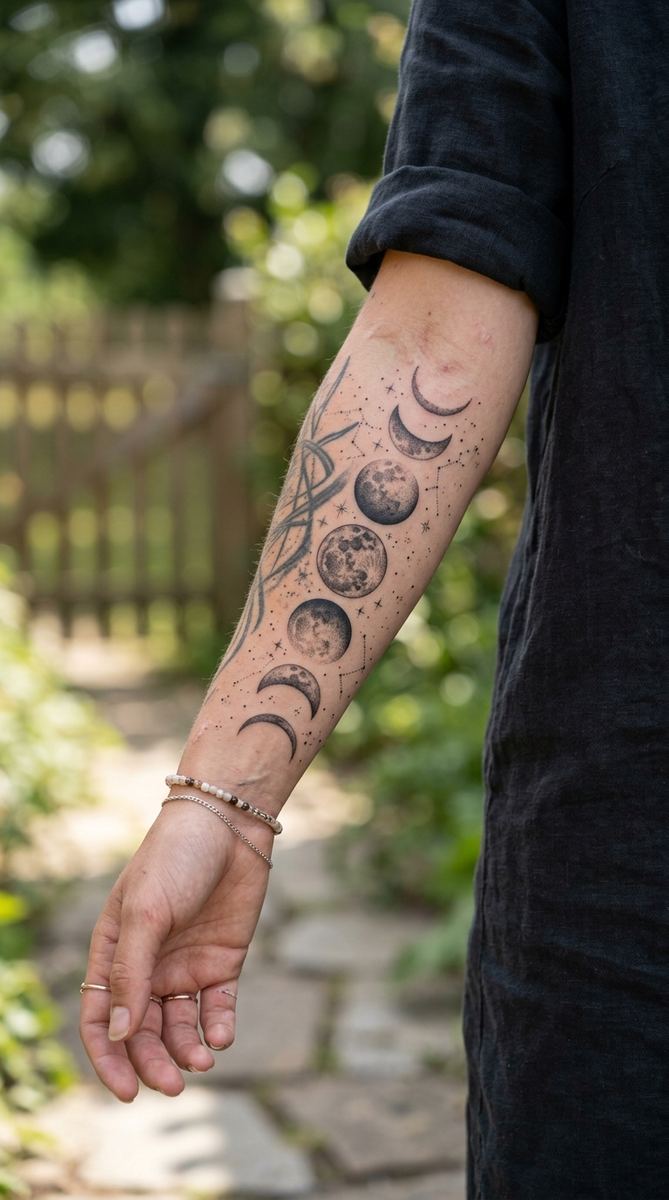
Celestial Moon Phases
Moon phases marching down the forearm make a mesmerizing cover-up. The sequence of shaded discs gives your artist a row of dark shapes to place over old ink, with dotwork stars filling the spaces between. It is spiritual, rhythmic, and quietly bold.
This works best when the old tattoo is broken into segments or is itself long and narrow. Each moon can sit over a different part of the old design, like chapters.
Sequential disc placement turns coverage into a pattern. Plan the sequence with your artist so the darkest moons land on the darkest old ink.
Budget tip: moon phases are mostly black-and-grey, which keeps costs moderate. The piece is often done in one session. Dotwork stars need a light healing touch — no picking at flakes. Once healed, the phases read beautifully even from a distance.
Moon phase tattoos invite personal meaning — many women align the full moon with a significant date. If the phases will carry meaning for you, tell your artist which moon matters most so it gets the finest detail. Personal stakes make the piece more precious.
Conclusion
Forearm cover up tattoos for women succeed when the design respects the arm’s shape and the old ink’s reality. Long vines, swimming koi, bold blooms, and clever patterns all use the forearm’s length as an advantage. The common thread is honesty: show your artist the old tattoo, discuss its darkness and size openly, and let them guide the design. With the right plan, your most visible canvas becomes your favorite one — a piece you chose with clear eyes and love showing off. If you are still weighing where your next piece should live, our tattoo placement guide walks through choosing the perfect spot. If you are thinking of moving higher up the arm, these upper arm tattoos for women showcase stunning placements. If you prefer a lighter touch, fine line upper arm tattoos for women look effortlessly elegant. If you are getting inked with a friend, these matching friendship tattoos are perfect to get together. For a design that celebrates your bond, these meaningful friendship tattoos honour what you share.
Keep exploring: olive branch arm wrap tattoos, olive branch arm tattoos.